
Mukesh Ambani Reliance Jamnagar Deal Sparks Questions Whether Billionaire Controls Modi Government Foreign Visits And Energy Policies
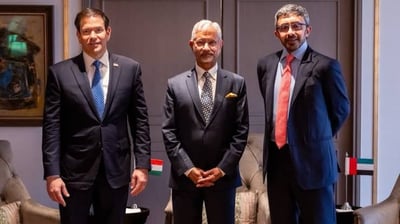
The United States government is directing its full diplomatic attention toward the massive industrial power of Indian private energy corporations, creating an intense political debate about who truly drives foreign policy. In an extraordinary diplomatic move, United States Secretary of State Marco Rubio traveled to the coastal city of Jamnagar in Gujarat to tour the private oil refinery of Reliance Industries and hold direct meetings with company chairman Mukesh Ambani. The high profile visit highlights how global energy diplomacy has moved straight into the boardroom of a private corporate empire, raising serious questions among citizens and political watchers about whether big corporate money is steering state level diplomacy and prime ministerial priorities.
The Jamnagar refinery complex is widely recognized as the largest and most complex single site oil processing facility in the world, refining about 1.4 million barrels of crude oil every single day. The facility has advanced chemical processing and conversion units that allow it to refine more than two hundred types of crude oil, including heavy and sour grades that most conventional refineries cannot process. Because of this rare technological power, Washington views Reliance Industries as an indispensable commercial partner to process crude and supply finished fuel to world markets during international energy shortages.
The main purpose of this visit by American officials centers on Venezuelan crude oil and broader energy diversification. With changes in American sanctions policies, Washington wants heavy Venezuelan crude refined by advanced Indian facilities instead of staying locked out of global markets. By encouraging Reliance to process Venezuelan oil alongside expanded shipments of American crude oil and liquefied gas, the United States seeks to secure steady international diesel supplies while creating a strong commercial competitor against Russian crude shipments.
At the same time, the close business ties between Washington and Reliance Industries reach deep into the American domestic market. Earlier, top political leaders in the United States drew attention to major foreign investments involving Reliance, including long term commercial discussions tied to a massive three hundred billion dollar energy and refining project located in Brownsville, Texas. By agreeing to fuel supply arrangements with American energy partners, Reliance is positioning itself as a central player in the global fuel supply network, connecting American oil extraction directly to international commercial distribution.
However, this high profile visit has triggered strong political criticism inside India regarding the relationship between the central government and private business magnates. Opposition parties and civil rights groups have pointedly asked whether Mukesh Ambani and the corporate conglomerate are exercising excessive control over official foreign visits and national foreign policy. In standard diplomatic protocol, visiting foreign ministers hold discussions with government counterparts inside official state buildings. The sight of the top foreign affairs diplomat of the United States traveling directly to a private corporate industrial plant has raised public concerns that state diplomacy is being aligned around the private commercial expansion of favored billionaires.
Critics point out that under the leadership of Narendra Modi, the divide between national diplomatic interests and corporate business goals has grown increasingly blurred. Over the last decade, both the Reliance group and the Adani group have secured massive international contracts in seaports, airports, green energy, and petrochemicals during or immediately after high level government foreign visits. Political observers argue that while ordinary Indian citizens deal with high food inflation, expensive domestic fuel prices, and heavy goods and services taxes, the machinery of Indian diplomacy appears repeatedly deployed to open foreign markets, secure crude contracts, and negotiate global protections for a handful of powerful oligarchs.
Supporters of the government offer a different perspective, arguing that commercial diplomacy is an essential weapon for any rising economic power. They argue that supporting domestic multinational giants is how countries like the United States, South Korea, and Japan built their global economic dominance. According to this view, Reliance represents a vital national asset, and utilizing its refining power allows India to negotiate from a position of industrial strength, secure national energy reserves, and balance trade equations with global superpowers. Government representatives maintain that official state diplomacy and private commercial strengths work together to boost national gross domestic product and expand employment.
Yet, this close alignment between the state and select private titans carries heavy strategic vulnerabilities for the country. When foreign powers observe that key national infrastructure and energy negotiations run through specific private conglomerates, foreign policy becomes susceptible to private corporate lobbying. If American political administrations change their regulatory stances, cancel export licenses, or reintroduce punitive tariffs, private corporations can shift their business models overnight, leaving national interests exposed. Furthermore, concentrating foreign economic negotiations around private billionaires creates a dangerous domestic imbalance, signaling that foreign policy serves boardroom balance sheets rather than the welfare of the common taxpayer.
In evaluating this major development, the meeting between Marco Rubio and Mukesh Ambani confirms that corporate wealth now sits at the very heart of international geopolitics. While industrial capability gives India substantial bargaining power on the world stage, a sovereign democracy cannot allow private commercial ambitions to dictate its external affairs. True foreign policy must remain transparent, accountable to parliament, and dedicated to the social and economic security of all citizens rather than the enrichment of corporate conglomerates.