
Rae Bareli Industrial Growth Surges As Yogi Government Expands Manufacturing And MSME Supply Chains
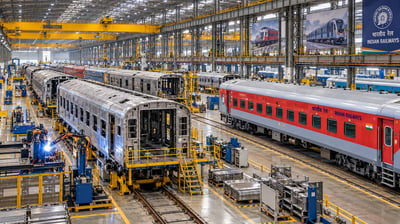
Rae Bareli is experiencing a visible economic turnaround, leaving behind its old image of an overlooked agricultural district to emerge as one of Uttar Pradesh's prime industrial and manufacturing centers. Over the past few years, focused industrial policies, faster government clearances, and targeted investments have helped create a bustling ecosystem where large engineering enterprises and small neighborhood workshops work hand in hand. The district, long known strictly through the lens of VIP political contests, is now gaining widespread recognition for industrial output, factory job creation, and rapid commercial expansion.
At the center of this transformation stands the Modern Coach Factory located at Lalganj. Although the facility was conceived decades ago, it remained heavily underutilized for years, largely handling minor repair jobs rather than full manufacturing operations. The state government worked in close coordination with central railway authorities to remove administrative bottlenecks, upgrade road connectivity, and provide uninterrupted electricity supplies to the production floors. The turnaround has been sharp, with annual output climbing to record levels and crossing over two thousand coaches every year, including modern trainsets like the Vande Bharat.
The massive expansion of this mega facility did not stay limited inside the factory gates. It triggered a strong demand for hundreds of parts, components, and specialized services, giving birth to a flourishing local supply network. Small engineering units, metal fabrication shops, electrical wiring makers, and tool workshops began springing up in surrounding industrial areas. Where the railway factory once bought barely minimal supplies from local firms, it now purchases components worth hundreds of crores directly from regional small and medium enterprises, ensuring money stays and circulates inside the local economy.
Micro, Small, and Medium Enterprises have become the real backbone of this ongoing growth story. To assist local entrepreneurs, the administration opened dedicated industrial corridors, simplified single-window trade permissions, and eased credit access for small businesses. Local workshops that previously struggled with low orders are now manufacturing seats, fiber components, safety equipment, fasteners, and heavy steel assemblies for national transit projects. This steady demand has provided regional business owners with stable contracts and the confidence to expand their operations.
Employment patterns across the district have changed significantly because of this industrial push. For generations, educated young people from towns and villages around the district were forced to migrate to distant metropolitan cities in search of factory work. Today, local industrial parks and technical training centers are generating employment for thousands of young engineers, welders, machinists, fitters, and logistics operators right near their homes. Skill-building centers linked to manufacturing requirements have helped local youth secure well-paying jobs, creating a dependable source of income for thousands of families.
Infrastructure across the district has received a major overhaul to support this economic activity. Broad highways, improved rail freight sidings, modern warehousing units, and digital administrative offices have significantly cut transportation delays and lowered business costs. The state administration has sanctioned hundreds of civic projects, covering clean drinking water lines, rural link roads, and power substations that feed both factory zones and residential neighborhoods. These improvements have helped bridge the divide between rural areas and fast-growing industrial estates.
Local shopkeepers, traders, and service providers have also experienced the positive ripple effects of industrialization. With thousands of workers earning steady factory salaries, local markets, housing complexes, and food joints have witnessed steady customer footfall. Small logistics operators, truck owners, and equipment repairers have found consistent daily business moving raw materials from suppliers to factory assembly lines. The entire regional economy has shifted from seasonal farm dependency to round-the-year economic stability.
Development experts point out that the growth model unfolding in the district demonstrates how a single large anchor industry can pull an entire district forward when backed by supportive policies. By building dedicated mini industrial estates and training the local workforce, the district has broken free from decades of industrial stagnation. As new industrial proposals take shape, Rae Bareli is setting an example of how state-driven development and small business enterprise can combine to build a lasting manufacturing engine.