
"My Conscience is Clear": Arvind Kejriwal Refuses to Fight His Case in Court!
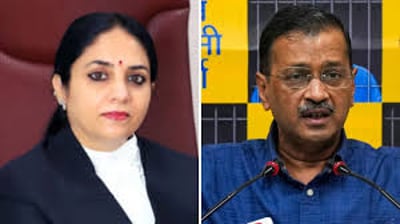
In a move that has stunned the legal community, Arvind Kejriwal has declared a "judicial strike." The AAP leader wrote a formal letter to Justice Swarana Kanta Sharma of the Delhi High Court, stating that he will no longer participate in the proceedings of the CBI’s Excise Policy case. He made it very clear: he will not appear in person, and he will not even send his lawyers to represent him. Citing the principles of Mahatma Gandhi’s "Satyagraha," Kejriwal claimed that he has lost faith in the fairness of the current proceedings. He argued that justice must not only be done but must also be "seen to be done," and in his view, the scales are currently tipped against him. This is a rare instance of a high-profile politician choosing "civil disobedience" inside a courtroom.
The core of Kejriwal’s complaint lies in a perceived conflict of interest. He had previously asked Justice Sharma to step away from the case (recusal), pointing out that her children were on the government’s legal panels and that she had participated in events linked to the RSS. When the judge refused to step down and used strong language to dismiss his concerns, Kejriwal decided that "participation is futile." In his letter, he acknowledges that this move is dangerous for him. By not defending himself, the court can pass orders against him without hearing his side. However, he stated he is "ready to bear the consequences" to protect the dignity of the judiciary from what he calls a "sham investigation" driven by political vendetta.
Looking at this critically, Kejriwal is playing a very high-stakes game of "moral politics." By framing his legal battle as a Gandhian struggle, he is trying to move the case from the courtroom to the "court of the people." He wants to show the public that he is being "persecuted" so badly that he has no choice but to stop fighting legally. While this might win him sympathy among his supporters, it is a risky legal strategy. In the eyes of the law, a "boycott" does not stop the trial; it only makes it easier for the prosecution to win. It also sets a controversial precedent—if every politician who feels a judge is biased starts boycotting the court, the entire legal system could come to a standstill.
In conclusion, Arvind Kejriwal’s letter is a desperate but calculated attempt to change the narrative of the Excise Policy case. He is choosing to become a "legal martyr" rather than a defendant. Whether this "Satyagraha" will force the higher courts to intervene or simply lead to a quicker conviction remains to be seen. For now, he has effectively turned a complex corruption case into a dramatic battle of "conscience versus the system."