
Need Pure Petrol Then Pay More Said Gadkari, Once Promised Fuel At RS 15, Is This A Bluff To Indian People
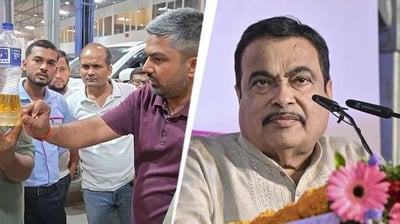
The Indian fuel market is witnessing an intense debate after Union Road Transport and Highways Minister Nitin Gadkari made a bold statement on July 15 2026 regarding the ongoing transition to E20 ethanol blended fuel. Addressing growing public criticism over vehicle mileage drops and potential engine wear, Gadkari stated that motorists who do not want ethanol blended fuel are absolutely free to buy 100 percent pure petrol, but they will have to pay a much higher premium price at the pump. This statement has immediately drawn sharp contrasts with his own highly publicized remarks from July 5 2023 in Pratapgarh, Rajasthan, where he claimed that petrol could be sold at just 15 rupees per litre if the nation adopted a mix of 60 percent ethanol and 40 percent electricity. The striking shift from promising 15 rupee fuel to telling citizens to pay extra if they want standard unblended petrol has sparked heavy criticism, leading many citizens and political analysts to question if these statements amount to a political bluff.
The primary cause of the current public frustration stems from the rapid, mandatory nationwide rollout of E20 fuel, which contains 20 percent ethanol blended into standard petrol. Official reports from the Ministry of Petroleum and Natural Gas in July 2026 have confirmed that E20 fuel causes a direct 3 to 5 percent drop in fuel efficiency due to the lower energy content of ethanol compared to pure fossil fuel. Financial data reveals that a standard car owner driving 10000 kilometers a year will face an additional fuel expenditure ranging between 15800 rupees and 26880 rupees over a 10 year period. Despite this reduction in mileage, the retail price of E20 fuel remains identical to what pure petrol used to cost, leaving ordinary commuters to bear the financial burden of a less efficient fuel without any price relief at the pump.
A critical view of the situation reveals a clear gap between high level policy goals and the everyday reality of Indian motorists. The government heavily protects the procurement price of domestically produced ethanol, buying maize based ethanol at around 71.86 rupees per litre to support the rural agricultural economy and transfer money directly to farmers. Because of these high domestic procurement costs and processing expenses, E20 fuel is actually more expensive to manufacture than pure petrol when global crude oil trades around 70 dollars per barrel. Consequently, the government cannot lower the price of E20 for the public, meaning the spectacular vision of 15 rupee fuel remains a mathematical abstraction rather than a practical retail reality, while the alternative of buying pure petrol requires purchasing specialized 100 octane fuels that retail at over 160 rupees per litre.
From a broader perspective, the rapid transition to an ethanol blended economy represents a significant macroeconomic success for the state but a mixed bag for individual consumer wallets. The government points out that the ethanol blending program has successfully saved 1.97 lakh crore rupees in foreign exchange, substituted 316 lakh metric tonnes of imported crude oil, and insulated the domestic market from violent global oil price spikes. While these structural achievements protect the national economy and lower overall carbon emissions, the lack of an immediate financial reward or a discounted fuel option for vehicle owners continues to fuel skepticism. The ongoing debate highlights the difficult balance between achieving long term national energy security and maintaining the trust of everyday consumers who feel the immediate pinch of lower mileage and rising operational costs.