
One Nation One Election Panel Proposed Meeting With Supreme Court Judges Triggers Constitutional Concerns Before Meeting Dropped
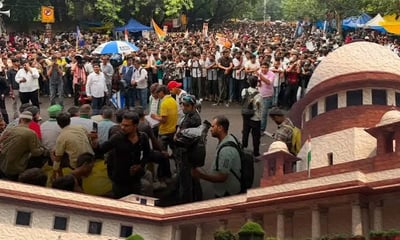
A proposal by the parliamentary committee examining the One Nation One Election plan to meet sitting judges of the Supreme Court of India has triggered serious legal debate across the country legal community. Constitutional scholars and senior advocates raised fundamental concerns regarding judicial neutrality and the separation of powers under the Constitution of India, arguing that sitting judges should never be lobbied or informally consulted on legislative policies that could later be challenged before them in court.
The issue came into sharp public focus after legal journalist Manu Sebastian reported that the committee sought an audience to brief judges of the apex court on the proposed framework for holding simultaneous elections across the nation. The prospect of sitting judges holding private discussions with a legislative drafting body immediately raised eyebrows among senior bar members, who warned that such closed-door interactions cross established boundaries between the judiciary and the legislature.
Prominent constitutional voices, including Senior Advocate and Rajya Sabha member Kapil Sibal, voiced strong objections to the move. Describing the proposal as deeply disturbing and an affront to constitutional principles, Sibal questioned how a parliamentary panel could seek an audience with the Chief Justice of India and sitting judges to brief them on pending policy. He pointed out that if parliament eventually passes constitutional amendments to enforce simultaneous polls, the Supreme Court is the very constitutional forum where those laws will be tested for basic structure violations.
The controversy centers on the doctrine of separation of powers, which serves as a cornerstone of the Indian constitutional system. While the government and parliamentary committees regularly consult retired judges, former chief justices, and independent legal scholars for policy guidance, engaging with sitting judges on legislative drafts is widely considered inappropriate. Sitting judges are bound by judicial conduct norms to maintain neutrality and must avoid expressing preliminary opinions on policy matters outside of formal courtroom hearings.
Legal experts noted that simultaneous elections would require far-reaching changes to the Constitution, including altering the fixed terms of state legislative assemblies and adjusting federal mechanisms. If any future constitutional amendment is challenged, sitting judges must hear the arguments openly, with full public transparency and representation from all political parties and state governments. Participating in informal private consultations beforehand could be seen as pre-judging the validity of the proposals.
Following strong public reactions and widespread discussions within legal circles, Supreme Court sources officially clarified that no such meeting with the panel is taking place. The clarification confirmed that the sitting judges of the highest court will not hold any audience or informal discussions with the committee regarding the simultaneous elections bill.
The One Nation One Election framework has been the subject of intense national debate, with proponents arguing that holding simultaneous polls for the Lok Sabha and state assemblies will cut public election expenditures, stop administrative paralysis caused by frequent election codes, and allow governments to focus on long-term policy work. On the other hand, opposition parties and several state governments argue that simultaneous elections harm regional interests, weaken parliamentary accountability, and undermine federalism.
The controversy highlights the delicate balance between government policy-making and judicial independence in India. By stepping away from the proposed meeting, the apex court has preserved the necessary constitutional boundary between lawmakers and the independent judges who must ultimately safeguard the Constitution.