
Opposition Writes To CJI Surya Kant Threatening Systemic Danger Over Massive Voter Roll Purge
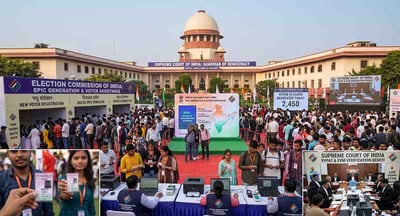
In a major political move that signals deep structural anxiety over the health of Indian democracy, 23 opposition parties alongside 1 independent lawmaker have collectively petitioned Chief Justice of India Surya Kant. This unexpected escalation bypasses normal legislative protests to drop a major constitutional grievance directly onto the desk of the highest judicial authority in the country. The unified political front operating under the banner of Solidarity, Unity, and Resistance has formally flagged what they call the biased conduct of the Election Commission of India. At the absolute center of this explosive complaint is the phase-wise implementation of the Special Intensive Revision process, a massive administrative cleanup campaign designed to sanitize electoral rolls by deleting duplicate, migrated, or deceased voters. The opposition, however, alleges that this tool has been systematically weaponized into a mechanism for targeted voter deletion, which they fear could compromise upcoming regional assembly elections in multiple states.
The sheer scale of political mobilization behind this letter highlights how deeply the opposition distrusts current electoral safeguards. While 21 political parties originally ironed out the foundational resolution during a high-stakes strategy meeting at Delhi's Constitution Club on June 8, 2026, intense behind-the-scenes negotiations successfully brought 2 major estranged regional giants back into the fold. The Aam Aadmi Party, which had limited its alliance cooperation strictly to the previous general election cycle, and the Dravida Munnetra Kazhagam, which had recently broken away over local legislative friction, both added their crucial signatures to the final document. This issue-based alignment demonstrates that concerns regarding institutional overreach and voter disenfranchisement are potent enough to bridge deep, preexisting political divides. Leaders across the spectrum have realized that regular field protests might yield limited results against an independent constitutional body, pushing them to seek immediate protective intervention from the Supreme Court.
A balanced assessment of this development reveals a profound structural tension between administrative efficiency and democratic inclusivity. From a governance standpoint, periodic updating of voter lists via mechanisms like the Special Intensive Revision process is legally mandated and technically essential to prevent voter fraud and maintain data accuracy. The Supreme Court itself recently recognized this institutional authority in late May 2026 during the Association for Democratic Reforms vs Election Commission of India case, validating the legal framework of these purges. However, the operational execution of such vast deletions right before critical state polls creates an undeniable systemic risk. When millions of names are wiped from the registers without exhaustive physical verification or accessible grievance windows, the burden of proof unfairly shifts onto vulnerable citizens who discover their disenfranchisement only at the polling booth, turning a technical cleanup into an inadvertent tool of exclusion.
The long-term impact of this judicial appeal depends heavily on how the Supreme Court responds to an issue it has historically treated with immense institutional deference. By positioning the Election Commission of India as an entity requiring strict judicial oversight rather than standard administrative autonomy, the opposition is testing the boundaries of constitutional checks and balances. If the judiciary declines to intervene, citing the plenary powers granted under Article 324, it could deepen the opposition's sense of institutional isolation and accelerate public skepticism toward voting processes. Conversely, if the court establishes more stringent, transparent guidelines for voter roll revisions, it could restore essential public trust. Ultimately, this joint petition proves that while regional parties may remain fierce rivals on local matters, systemic challenges to the core architecture of elections will continue to force unprecedented, defensive political alliances.