
Umar Khalid Breaks Silence On Six Years In Indian Jail Without Trial Calling Humanity A Privilege
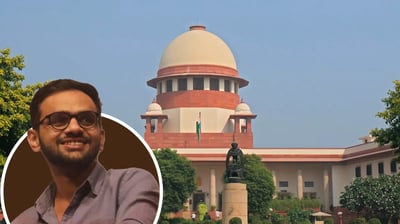
In a deeply personal development that has reignited the national conversation surrounding civil liberties, jailed activist Umar Khalid has broken his long silence after spending nearly six years in prison without a trial. Speaking from inside Delhi infamous Tihar jail, the former Jawaharlal Nehru University student leader detailed the punishing emotional and physical toll of his ongoing confinement. Arrested in September 2020 by the Delhi Police under the stringent Unlawful Activities Prevention Act, Khalid stands accused of being a key conspirator behind the deadly communal riots that shook Northeast Delhi earlier that year. For over 2000 days, his life has been reduced to the stark realities of prisoner number 626714. In his first detailed interview since his arrest, Khalid reflected on the profound isolation of his reality, noting that even simple human empathy has become a distant luxury, as the label of an anti-national and terrorist continues to shape public perception and even the whispers of fellow inmates.
The absolute lack of progress in his legal proceedings highlights a growing crisis within the Indian judicial framework regarding long undertrial detentions. Despite the passage of more than half a decade, the primary trial against Khalid has not even commenced, leaving him trapped in an administrative loop of endless bail hearings and subsequent rejections. In January 2026, a two judge bench of the Supreme Court of India led by Justice Aravind Kumar rejected his regular bail application, stating that a surface level review of the case diary indicated a prima facie case against him. This ruling came even as the exact same bench granted bail to five other co-accused in the larger conspiracy case. The continuous denial of his freedom has turned the legal process itself into a form of systemic punishment, forcing Khalid to navigate intense litigation just to secure minor personal reprieves, such as a brief three day interim bail granted in May 2026 to stand by his mother during a medical surgery.
A close look at this prolonged incarceration reveals a deep doctrinal conflict brewing within the highest levels of the Indian judiciary. Under Section 43D 5 of the anti terror law, granting bail is exceptionally difficult if the state assertions appear true on their face. However, this rigid framework directly clashes with the landmark Union of India vs K A Najeeb judgment of 2021, where the Supreme Court explicitly ruled that anti terror laws cannot completely override the fundamental right to life and liberty under Article 21 if a trial is endlessly delayed. The ongoing legal gridlock became so pronounced that on May 22 2026, the apex court formally referred these conflicting bail interpretations to a much larger constitutional bench. While legal scholars and judges debate the fine lines of statutory limitations versus constitutional freedoms, the practical cost of this institutional hesitation is borne directly by individuals who remain locked away before their guilt is ever proven in a court of law.
The international attention surrounding Khalid situation underscores how much his case has become a symbol for the broader state of political dissent in India. Rights groups and independent observers point to his long detention as a prime example of the weaponization of security laws to silence vocal critics of the ruling administration. By keeping prominent protest figures behind bars indefinitely without allowing them the opportunity to contest the evidence in a formal trial, the state successfully creates a chilling effect across the wider democratic landscape. Ultimately, the resolution of this case will serve as a defining test for the Indian judiciary. The upcoming decisions of the larger Supreme Court bench will determine whether the legal system will continue to prioritize total state security over individual liberty, or if it will restore the foundational legal maxim that bail is the rule and jail is the exception.