
PM Modi Arrives In Netherlands But Questions Rise Why Ordinary Indians Are Told To Work From Home While Leaders Travel Big Boundaries For Meetings
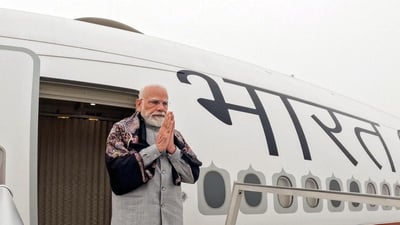
Prime Minister Narendra Modi has arrived in the Netherlands marking the secondary phase of an energetic five nation international tour aimed at strengthening economic and industrial cooperation. This comprehensive European visit spans across the United Arab Emirates, the Netherlands, Sweden, Norway, and Italy to consolidate significant agreements in green technology, semiconductor supply chains, and digital innovations. Upon arrival in the Netherlands the Indian leader was welcomed by senior Dutch military and diplomatic figures before proceeding to hold high level talks with Prime Minister Rob Jetten alongside a formal meeting with King Willem Alexander. The Ministry of External Affairs has highlighted that these physical engagements are highly critical for advancing the India European Union Free Trade Agreement and securing multi billion dollar foreign direct investments into domestic infrastructure.
While the diplomatic community celebrates these physical roundtables a growing section of the public is raising uncomfortable questions regarding the visible gap between governance advisories and leadership actions. Over the last few years the government has consistently pushed working professionals and corporate entities to adopt work from home models, digital transformations, and minimized physical travel to reduce carbon footprints and city congestion. The common citizen is frequently advised to utilize digital platforms for everyday professional operations to ensure environmental sustainability and cost efficiency. Consequently the spectacle of massive state delegations flying across multiple continents on chartered aircraft creates a sharp ideological friction for ordinary citizens who are told to limit their physical mobility and operate through a computer screen.
The core of this public debate centers on why advanced digital communication frameworks are deemed sufficient for corporate execution but insufficient for top tier statecraft. Critics point out that during global emergencies world leaders seamlessly conducted full scale international summits through highly secure encrypted video conferencing channels without disrupting geopolitical relationships. The reluctance to utilize online meeting frameworks for routine diplomatic reviews suggests an expensive reliance on traditional face to face optics rather than modern operational efficiency. While physical presence undoubtedly offers unique avenues for informal negotiation, the refusal to transition standard bilateral reviews to virtual platforms looks highly contradictory when the state simultaneously urges the private sector to embrace remote operational models.
From an institutional perspective the government defends these physical foreign tours by arguing that high value international treaties involving strategic sectors like defense manufacturing and green hydrogen require deep interpersonal trust that cannot be replicated via a digital screen. The personal chemistry between heads of state and the ability to address large gathering formats of the Indian diaspora are viewed as irreplaceable tools for geopolitical leverage. However a balanced assessment reveals that while foreign policy demands strong personal engagement, the lack of a hybrid model that balances virtual conferences with essential travel leaves the leadership vulnerable to charges of maintaining separate standards. Until statecraft actively embraces the same remote working standards it prescribes to the public, these multi nation tours will continue to face scrutiny from citizens managing their lives through digital boundaries.