
Poland Mass Shooting Gunman Dies In Hospital As Krakow Mourns Victims Of Historic Square Attack
A dark silence settled over one of the most famous public squares in central Europe after an afternoon of celebration was shattered by sudden gunfire. The historic Old Town of Krakow is usually packed with laughing tourists, university students, street musicians, and families sharing meals outside small cafes. Pigeons fly across the open cobblestone ground while horse carriages move slowly between ancient churches. All that happiness disappeared within seconds when sharp popping noises broke the air. People thought they were hearing fireworks or construction sounds, but terror quickly followed. Screams echoed across the square as men and women ran in every direction, desperately pulling their children into restaurants and behind shop doors to find shelter from flying bullets.
The young gunman responsible for the deadly attack died in a hospital bed in Poland in November 2026 after doctors tried for days to save his life so he could face justice. Hospital workers in Krakow confirmed that the twenty-four year old shooter, identified as Michal Oksinski, passed away early in the morning following multiple emergency surgeries. He had remained under heavy armed police guard in critical condition ever since police officers brought him down during the attack. Officers had shot him in the torso only minutes after he drove a car directly into the pedestrian zone and stepped out to fire at innocent crowds. His death closes the legal case against him personally, but it brings little peace to the families whose lives have been torn apart forever.
The attack itself was planned with chilling calculation. The assailant arrived at the Main Market Square wearing dark military clothes and a heavy bulletproof vest. He carried high-powered firearms and extra ammunition boxes inside his vehicle. Without uttering a single word to the people nearby, he began firing into crowds of pedestrians who were enjoying an ordinary weekend stroll. Panic spread instantly. Shopkeepers quickly unlocked their back storage rooms and pulled strangers inside, turning off lights and whispering to keep crying toddlers quiet. Eyewitnesses described seeing people fall to the stone pavement while brave bystanders tried to drag wounded victims behind stone pillars even as bullets continued to hit nearby walls.
Police officers patrolling nearby responded with exceptional courage and speed. Hearing the first rounds of gunfire, patrol officers ran straight toward the sound of the shooting rather than away from it. Within minutes, armed law enforcement confronted the attacker in the middle of the square. After a brief exchange of fire, police bullets struck the gunman, forcing him to drop his weapon onto the cobblestones. Officers pinned him to the ground, placed him in handcuffs, and called for medical backup. Security experts noted that had the police officers taken even two minutes longer to reach the scene, the loss of human life in the crowded tourist hub would have been far worse.
The human cost of the violence is heartbreaking. Six innocent people lost their lives in the shooting, including four women and two men. Four of the victims were Polish citizens who had come to the city center for work or leisure. The other two victims were foreign visitors, including an Austrian woman and a British man who were visiting the historical landmarks of Krakow. Another fifteen people suffered serious injuries, including travelers from the United Kingdom, Germany, Portugal, and Austria. Surgeons at local trauma centers worked throughout the night to perform life-saving operations, removing bullet fragments and treating broken bones. Hospital waiting rooms were filled with weeping relatives who had rushed from distant towns and foreign countries just to hold the hands of their injured loved ones.
As the nation tried to make sense of the public violence, an even darker horror was discovered in a small town about one hundred and fifty kilometers away. Police teams traveling to the shooter family home in Ostrowiec Swietokrzyski entered the residence and discovered the dead bodies of three people. Detectives confirmed that the victims were the gunman mother, father, and sister, all of whom had died from gunshot wounds. Prosecutors believe that the shooter murdered his entire immediate family inside their home before packing weapons into his car and driving down the highway toward the crowded city center of Krakow. The discovery revealed that the public massacre was the second part of a violent rampage that began behind closed family doors.
Investigators searching the family house discovered a large collection of weapons. Local officials confirmed that the father had owned more than ten firearms legally, and the family kept rifles and handguns stored in the house. Security teams found seven weapons inside the home and four more firearms with the young man in Krakow, bringing the total number of recovered guns to eleven. Detectives are examining how the son managed to take these weapons and whether they were kept inside locked steel safes as required by national gun laws. In Poland, violent mass shootings are extremely rare because obtaining a gun license requires strict medical evaluations, background checks, and regular government monitoring. The fact that an individual could assemble such a deadly arsenal has sent shockwaves through government ministries.
The motive behind this horrific act points toward dangerous extremist ideas. Security officers examining the shooter personal computer, phone records, and internet browsing history found evidence of far-right propaganda and hateful materials. Friends and acquaintances who knew the young man described him as increasingly withdrawn over recent months, spending hours alone in his room reading hateful political forums. Investigators believe his choice to target a famous public square filled with international tourists was a deliberate attempt to gain global attention for his radical beliefs. Psychologists and security experts are studying his writings to understand how a young person living in a quiet town could fall down a path of such extreme violence.
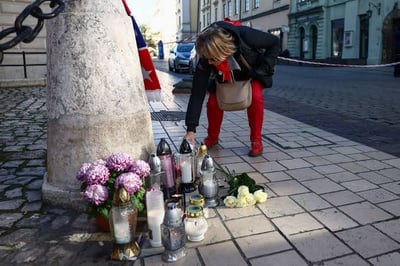
The tragedy has left the historic city of Krakow in deep mourning. The Main Market Square, which has stood proudly for hundreds of years through wars and peace, became a field of flickering candlelight. Thousands of local residents gathered quietly to lay red roses, light candles, and place handwritten notes of love at the spots where innocent people fell. In a rare and emotional moment, the famous trumpet call that plays from the high tower of Saint Mary Basilica every single hour fell completely silent, marking the first time the song was missed since the dark days of the second world war. Across Europe, flags flew at half-mast outside the European Commission building in Brussels as leaders sent condolences to the Polish people.
In the wake of the killings, political leaders across the nation are facing intense calls to review national gun regulations. Lawmakers are debating whether background checks for gun owners must be expanded to include all family members living under the same roof. Community leaders are demanding that mental health support systems and early warning mechanisms be strengthened to catch troubled individuals before they act out violent fantasies. For ordinary people walking through Krakow, the feeling of complete safety has been shaken. A peaceful city known for art, history, and warmth now faces the long, painful road of healing, determined to remember the innocent lives lost and ensure such cruelty never visits their streets again.