
Telangana Voter List ASDD Revision Gives Second Opportunity for Excluded Citizens to Reclaim Voting Rights
Every citizen treasures the fundamental right to cast a ballot and choose representatives who shape community life. For countless ordinary families across urban neighborhoods, quiet villages, and bustling towns, discovering that a family member's name has vanished from the voter records brings deep frustration and helplessness. People often stand in long queues outside polling centers, holding valid identity cards, only to hear that official registers do not carry their names. To resolve these painful experiences and protect genuine voting rights, election authorities across the state have set in motion a major public initiative. This mission focuses specifically on individuals previously categorized under the absent, shifted, dead, and duplicate records, creating a clear and supportive pathway for people to verify their residential standing and reclaim their place in democratic decision-making.
The system groups flagged voter files under an administrative tag known as ASDD. While election management requires regular cleanup to remove names of deceased persons or duplicate registrations created by administrative error, living people often face mistaken removals. Families frequently relocate to rented houses within the same locality, young professionals shift residences for employment, students migrate temporarily for higher education, or workers travel across districts for seasonal labor. During regular checks, when an official knocks on a locked door and finds nobody at home, the resident often gets listed as absent or shifted. Through this fresh verification exercise, the administration aims to reverse unintentional exclusions and ensure that no living, eligible resident gets denied the right to vote due to paperwork misunderstandings.
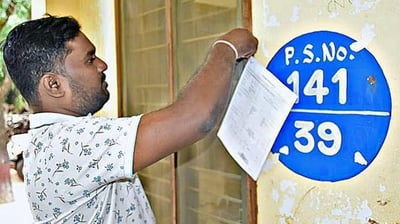
Under this renewed door-to-door mission, Booth Level Officers will walk through designated neighborhoods to contact individuals whose voting status remains unconfirmed. These local officers serve as the primary link between ordinary people and the state electoral machinery. Instead of leaving citizens to struggle through complicated bureaucratic corridors, the officers carry fresh enumeration forms directly to doorsteps. They listen to concerns, inspect residential proof, confirm personal identity, and help family heads complete registration paperwork accurately on the spot. This hands-on assistance removes confusion, particularly for elderly citizens, daily wage earners, and homemakers who may find official paperwork overwhelming.
The timing of this ground verification is critical because election officials work within a strict administrative calendar. Across districts, verification teams gather fresh documents and process corrections rapidly so that administrative records reflect ground realities. Officials plan to finalize all verified entries and publish the comprehensive final voter list on November 30. Meeting this deadline ensures that community records stay completely accurate well before upcoming polling exercises take place, leaving no room for last-minute confusion or disputed claims on voting day.
Transparency stands at the center of this exercise, addressing long-standing public concerns about fairness and accountability. When voter lists contain errors, public trust in the voting process can suffer. Removing deceased individuals based on legal certificates prevents unlawful ballot usage, while eliminating duplicate registrations stops double voting. At the same time, giving a genuine second chance to people mistakenly labeled as dead or absent restores faith in democratic institutions. Community members and neighborhood groups have welcomed this proactive step, noting that human contact from local officers brings reassurance to vulnerable households who fear losing their civic voice.
Residents who suspect that their names might be missing or wrongly marked have a clear course of action during this drive. Anyone can approach their local booth officer or visit the neighborhood polling center to inspect the draft rolls. If a person finds their name missing or flagged incorrectly, they do not need to panic. The booth officer will hand over the relevant paper form, review supporting documents like residential proof or photo identification, and register the correction in the local ledger. Citizens can also seek guidance from local community volunteers who often assist neighborhood families in understanding official procedures.
Civil society organizations and local neighborhood associations are stepping up to support this administrative push. In many housing colonies and rural hamlets, community leaders are actively spreading word about the visiting officers. Youth groups help elderly neighbors find their identification records, while local volunteers guide migrant workers on how to submit valid rental agreements or local utility bills as residential proof. This collective neighborhood participation ensures that awareness reaches every corner, preventing eligible voters from missing the verification teams during their rounds.
A clean, accurate, and inclusive voter register represents the very foundation of fair governance. When every eligible resident gets counted, local governance mirrors the actual will of the public. The current outreach initiative in the state shows that administrative systems can operate with empathy and direct accountability toward ordinary people. By walking directly to the doorsteps of citizens and resolving record mistakes face to face, the election machinery protects the sacred principle that every citizen has an equal voice in shaping the future.