
Prakash Raj Joins Sonam Wangchuk At Jantar Mantar As Celebrities Clash Over High Stakes Hunger Strike
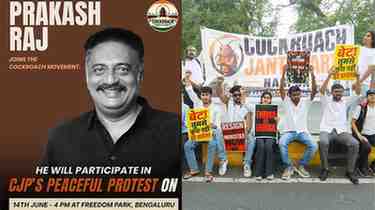
The political atmosphere at Jantar Mantar in New Delhi has reached a boiling point as popular figures from the film and music industries voice deeply contrasting opinions on the massive student agitation. Well known actor Prakash Raj recently arrived at the protest site to physically demonstrate his support for educator and climate activist Sonam Wangchuk. Wangchuk has touched the 14 day of an intense, indefinite hunger strike, sitting alongside demonstrators from the Cockroach Janata Party who have spent 22 days protesting alleged irregularities and paper leaks in the national medical entrance examination, NEET. Prakash Raj shared photographs of himself standing alongside the weakening activist and addressing the gathering of youth, openly declaring his full solidarity with the student community and their fight for structural reforms. The physical presence of a high profile actor like Prakash Raj brings massive media flashlights to the ground, which helps keep the public focus alive on important policy failures. However, this strategy also runs a major risk because wrapping a deeply structural issue like national exam reforms around high profile film personalities can easily turn a serious policy debate into a loud celebrity drama, distracting from the actual demands of the young aspirants.
While Prakash Raj chose to bring high profile visibility directly to the ground, playback singer Chinmayi Sripaada triggered a wider online conversation by taking a starkly different view on the utility of hunger strikes. Sharing her thoughts on social media, she openly pleaded for Wangchuk to end his fast immediately to save his life. Her hesitation did not stem from a disagreement with the student cause, but rather from a profound skepticism toward the responsiveness of the state machinery. Sripaada noted that no governing authority genuinely values individual sacrifices or the ethics being fought for. She further claimed that losing an impactful citizen is a tragic waste in a system that she believes readily yields public lands, forests, and natural water systems to major corporate conglomerates. Her viewpoint highlights a growing, weary sentiment among urban citizens who feel that ultimate personal sacrifices fail to pierce institutional apathy. While her practical look values human life over symbolic battles, it also reveals a dark, dangerous sense of defeatism that tells regular citizens that standing up against major administrative errors is completely useless.
Medical bulletins released by the medical team on the ground indicate a severe, compounding physical strain on Wangchuk, who has shed approximately 7.5 kg since the start of his fast and recorded a low sitting blood pressure of 106 over 74 mm Hg. Despite his deteriorating physical condition, Wangchuk released a video communication refuting popular titles like the modern Gandhi or a 21 century hero, stating he is simply a regular citizen trying to perform his civic duties. The unfolding dynamic presents a difficult societal puzzle. On one hand, visits from figures like Prakash Raj, who was granted conditional bail by a Bengaluru court just 1 day prior regarding a separate voter registration dispute, manage to capture immediate news headlines for the young students. On the other hand, the vast gap between the rapidly falling health numbers of an individual and the slow, cold movement of top level bureaucracy shows how uneven this fight really is. The human body has clear physical limits, but bureaucratic departments can drag their feet for months without losing anything, creating a cruel scenario where the system can simply wait out the physical stamina of the people on strike.
The real tragedy embedded within this high profile demonstration is the vast asymmetry between individual human cost and the sluggish pace of bureaucratic responses. When prominent public figures split their efforts between endorsing physical resistance and expressing hopeless cynicism, it serves as an exact mirror to the deep fractures running through the collective public mind. Public demonstrations cannot survive on high profile headlines alone, as media vanity eventually fades when a newer story breaks out. The ultimate test for this movement will arrive on July 20, the opening day of the upcoming parliamentary session, when a scheduled march to the legislature will prove whether this media attention can translate into actual administrative accountability. If the upcoming march to parliament fails to bring clear legislative changes, it will unfortunately prove that symbolic hunger strikes are losing their power against modern political structures, leaving regular citizens with fewer options to demand transparent governance.