
Record 274 Climbers Scale Mount Everest In A Single Day From Nepali Side As Crowding Risks Explode
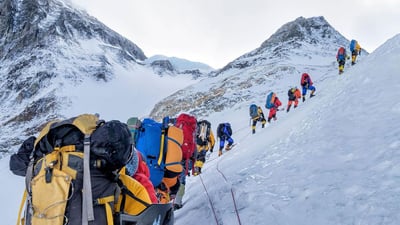
Mountaineering history was made in the Himalayas as a record-breaking 274 climbers successfully reached the summit of Mount Everest from the Nepali side in a single day. This massive surge of ascents took place during a brief window of perfect, clear weather, allowing hundreds of eager adventurers and their local guides to push for the highest point on Earth. According to official data from the Expedition Operators Association of Nepal, this incredible achievement easily beats the previous single-day Nepali side record of 223 climbers, which was established back in May 2019. The sudden rush toward the peak occurred because the current climbing season started much later than usual due to severe safety hazards, including a massive hanging ice cliff that threatened the main route. This delay compressed the timeline, forcing hundreds of teams waiting at lower base camps to make their final moves simultaneously once the weather cleared.
While the sheer volume of successful summits is being celebrated as a historic triumph, it highlights deep underlying dangers and structural problems with how the mountain is managed. Industry experts point out that having nearly three hundred individuals moving along the narrow ridge lines at the exact same time creates severe bottlenecks, particularly in the notorious area known as the death zone. At altitudes above eight thousand meters, the human body cannot survive for long periods because the natural oxygen levels are too low, making any delay caused by heavy foot traffic potentially fatal. The extreme congestion means that mountaineers are often forced to stand in long lines for hours, exhausting their heavy supplies of bottled oxygen while exposed to freezing temperatures. This worrying pattern shows that the desire to capitalize on rare clear weather windows often overrides safety warnings, transforming an already risky expedition into a highly dangerous waiting game.
The situation becomes even more complicated when looking at the broader economic and political choices driving these staggering numbers. Nepal issued nearly five hundred permits for the spring season, with each single permit costing fifteen thousand dollars, making the mountaineering industry a critical source of revenue for the national economy. However, international critics often argue that the government is allowing too many people on the mountain at the same time without enforcing strict experience requirements. This year, the pressure on the southern route in Nepal was amplified even further because Chinese authorities completely closed off access to the northern face in Tibet, leaving the Nepali side as the only available path for global expeditions. While some large commercial operators defend the massive crowds by claiming that professional teams carry enough emergency oxygen to handle delays, independent safety advocates warn that the current system pushes the limits of human endurance to a breaking point.
Despite the heavy criticism regarding overcrowding and environmental strain, this remarkable day also witnessed extraordinary individual feats by seasoned mountain veterans. Local Nepali guides continued to showcase their unmatched strength, with the legendary Kami Rita Sherpa successfully scaling the peak for a record-breaking thirty-second time, breaking his own previous world record. Additionally, female guide Lhakpa Sherpa extended her own record by completing her eleventh successful ascent of the world tallest mountain. As the brief spring climbing season draws to a close at the end of May, the record-shattering day will be remembered both as a stunning display of human determination and as a stark warning. The global community and local authorities must find a balance between fulfilling the dreams of international climbers and preventing the world highest peak from turning into a chaotic and dangerous gridlock.