
Sheikh Hasina Seeks New Passport To Return As Bangladesh Rejects Request Branding Her A Terrorist
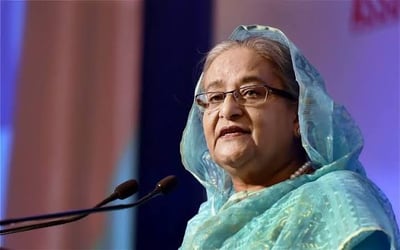
Former Bangladesh Prime Minister Sheikh Hasina has taken a major legal step to return to her homeland after months of living in exile across the border. The dramatic move came through her London based legal representatives, who sent a formal application to the Bangladesh diplomatic mission in New Delhi requesting a fresh travel passport and a national identity card. Hasina, who was forced out of office following massive public demonstrations, made it clear through her legal team that she wants to return home and appear before a court of law. The sudden request has sparked an intense diplomatic dispute, reigniting fierce political debates about her legal standing, her past governance, and her future in South Asian regional politics.
The response from the government in Dhaka was swift, harsh, and uncompromising. Senior ministers and foreign affairs officials in Bangladesh flatly rejected the idea of issuing fresh travel documents to the deposed leader. Junior Minister for Foreign Affairs Humaiun Kobir stated clearly that the state will not hand out administrative privileges to someone they consider a fugitive criminal and an ideological extremist. Speaking to reporters in Dhaka, Kobir stressed that Hasina is viewed as a terrorist by the current administration and should be handed over to face trial rather than granted safe travel paperwork. The administration maintains that the formal extradition treaty between Bangladesh and India remains completely active and must be used to bring her back in police custody.
The legal request sent by Matrix Chambers, the international legal firm representing Hasina, pointed out that her previous passport and identity papers were cancelled by the authorities who took control after her fall. Her lawyers argued that as a lifelong citizen of Bangladesh, she holds an undeniable right to basic national identification and standard travel papers under international human rights treaties. They urged diplomatic officers in New Delhi to process the application without delay so she can travel legally back to her homeland. Close aides working with the former prime minister confirmed that she has expressed a deep personal desire to go back, insisting that she wishes to face her accusers rather than live out her life on foreign soil.
The legal backdrop in Dhaka presents serious risks for Hasina should she step foot inside the country. A special tribunal in Bangladesh previously sentenced her to death in absentia for her role in ordering a deadly state crackdown against student demonstrators. The mass uprising, which saw violent street clashes and hundreds of deaths, led to the collapse of her administration and forced her sudden departure to India. Hasina has repeatedly rejected all charges against her, describing the trial as a politically motivated setup conducted without fair legal defense. Despite the death sentence hanging over her head, she has told international news agencies that she intends to surrender before a domestic court and fight for her innocence.
For India, the renewed controversy puts significant diplomatic pressure on foreign policy makers in New Delhi. The Indian government provided shelter to Hasina on humanitarian grounds when she arrived in an emergency situation following her ouster. Since then, authorities in Dhaka have repeatedly demanded that India extradite her to face legal punishment. New Delhi has remained careful, choosing not to act on the extradition demands while maintaining that peace, regional stability, and proper legal procedures must guide decisions. The fresh passport application from within Indian territory directly places the ball back in the diplomatic arena between the two neighboring capitals.
Inside Bangladesh, the public reaction to Hasina's planned return remains deeply divided. Large sections of the population, particularly the student activists and civil rights groups who led the street revolution, remain furious about the state violence that occurred during her rule. Many young people view her attempt to obtain travel papers as a political move to destabilize the current government. On the other hand, loyal supporters from her Awami League party, which was barred from recent elections, view her move as a courageous attempt to reclaim her voice, challenge political bans, and defend her family legacy against state persecution.
The current political leadership in Dhaka faces its own internal tests as it manages governance after months of political transition. Having formed a new elected administration, government leaders want to project strength, maintain law and order, and reassure the public that justice will be delivered for victims of past crackdowns. Allowing Hasina to enter Bangladesh on her own terms with regular legal documents could trigger street clashes between opposing political groups. This explains why Dhaka officials are standing firm on their demand that she must arrive only as an extradited prisoner under formal arrest, rather than as a returning citizen carrying a fresh official passport.
Legal experts note that denying a citizen a passport is a complicated matter under international conventions, but governments frequently withhold documents from individuals facing serious criminal verdicts. If the diplomatic mission in New Delhi continues to sit on the application or formally rejects it, Hasina's legal team could look to international forums or foreign courts to challenge the decision. However, without travel papers, boarding a commercial flight or crossing a land border back into Bangladesh will be nearly impossible through regular legal channels.
The standoff highlights how deep the political divide remains in Bangladesh long after the street protests ended. When national institutions, legal systems, and political parties cannot find common ground, basic administrative actions like renewing an identity card transform into high stakes battles. Whether Hasina manages to secure travel documents or remains in exile will have lasting consequences for domestic peace in Bangladesh and for the complex diplomatic ties that link Dhaka and New Delhi.