
Sonia Gandhi Memoir Belonging Reveals Rare Common Ground With Narendra Modi And Criticises RSS Role Behind Attacks On Jawaharlal Nehru
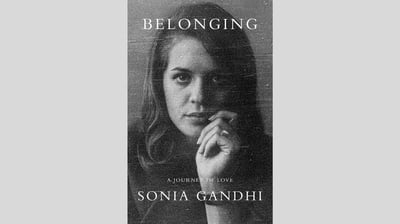
Former Congress party president Sonia Gandhi has opened up about her long political rivalry with Prime Minister Narendra Modi in her newly published personal book titled Belonging. For more than ten years, the two senior leaders have stood on opposite sides of India national elections, leading two powerful political groups with completely different views on how the country should be guided. In her detailed reflections, the veteran leader shares that despite being the two most prominent figures in Indian public life, they have spent almost no time speaking to each other directly in private conversations. Her observations offer regular readers an unusual and honest look into the personal distance that exists between the top rulers of modern Indian democracy.
She writes that their few direct interactions have taken place only during formal government meetings, such as gatherings called inside the Speaker room in the Parliament building. During these brief moments, the two opponents exchange simple and formal greetings, usually folding their hands in a standard namaste without stopping to talk further. She explains that this distant behavior feels very different from past decades in Indian politics, when leaders belonging to opposing political parties would still greet each other warmly, share jokes in parliament hallways, and maintain cordial personal relationships. She observes that when coming face to face, the Prime Minister often looks away and avoids direct eye contact, reflecting the deep wall that has grown between the ruling party and the opposition.
Even with this cold personal relationship, the book highlights an unexpected area of common ground between both personalities. She admits that she can understand the discomfort the Prime Minister feels toward the wealthy English speaking ruling circle of New Delhi. She confesses that when she first arrived in the national capital and entered political life, she often felt completely out of place in rich drawing rooms where politicians and high society figures held late night discussions. To her, the opinions shared by these privileged urban groups felt artificial and disconnected from the real hardships of ordinary citizens living in rural villages. Because of that shared feeling, she understands why an outsider would feel mistrust toward that traditional power network.
The former Congress chief also openly gives credit to Narendra Modi for his rise to the highest executive office in the country. She acknowledges that he did not inherit power from a famous family and had to work his way up through years of dedicated service from a very modest and underprivileged background. Climbing through the ranks of the Rashtriya Swayamsevak Sangh to lead the Bharatiya Janata Party and win national office required enormous personal effort and political skill. By pointing out his humble beginnings, she shows an ability to look beyond daily election hostility to recognize the hard personal path her chief political opponent took to reach power.
However, the book takes a critical turn when discussing the frequent verbal attacks made by the Prime Minister against India first prime minister, Jawaharlal Nehru. She explains that the constant public blame directed at Nehru cannot be understood simply as normal election arguments. Instead, she attributes these harsh statements to decades of political conditioning inside the Rashtriya Swayamsevak Sangh. She writes that the organization has spent many generations teaching its followers to oppose the secular and modern foundation established by Nehru, creating a deep emotional hostility that continues to show up in official speeches today.
Addressing the fierce electoral clashes between the Congress and the Bharatiya Janata Party over the past ten years, she insists that their fight was never built on personal hatred. Instead, she describes the ongoing contest as a battle between two completely opposite visions for the future of India. In her view, the ruling party represents a system focused on single party power and cultural uniformity, while her side has fought for a society that defends secular values, protects minority groups, and ensures equal welfare for weaker sections. Because both leaders believe deeply in their own path, their disagreements became unavoidable clashes of basic ideas rather than small personal feuds.
The five hundred and forty four page volume goes far beyond day to day government battles, giving readers an intimate account of her extraordinary personal journey across two different worlds. She recounts her early childhood in Italy, her student years in England, and the life changing moment she met Rajiv Gandhi. The book describes the difficult family discussions that took place before her marriage, including how Rajiv had to convince her hesitant father to allow her to move to a faraway nation, even though her father initially refused to attend the wedding ceremony in Delhi. These human stories show an ordinary young woman trying to adapt to a foreign land with completely new customs, languages, and public attention.
She also provides a warm and human portrayal of former Prime Minister Indira Gandhi, showing how the powerful national leader acted behind closed doors as a caring mother in law. Rather than the stern political figure known to the world, the book describes a woman who helped her new foreign daughter in law settle into daily household routines, teaching her about Indian culture, food, and family traditions. The memoir also touches on painful personal moments that were kept away from the public eye for decades, including the heartbreak of losing her first unborn child and her difficult medical battle against cancer in hospital rooms abroad.
Her entry into the messy world of full time politics is described as a choice forced by tragedy rather than personal ambition. Following the sudden deaths of Indira Gandhi and Rajiv Gandhi, she had fiercely guarded her privacy and wanted her children to stay away from the dangers of public life. However, as the Congress party faced internal division and weakness in the late nineties, senior party workers pleaded with her to take charge to keep the party united. She explains that stepping into the national spotlight was an agonizing decision, taken only out of a sense of duty toward the legacy of her family and the workers who believed in them.
The international release of the book, published by HarperCollins India and Alfred A Knopf, comes at an important turning point in national politics, drawing intense attention from scholars, political observers, and ordinary readers. Political analysts note that her frank words about both herself and her political rivals provide an important historical record of an era marked by deep political division. By discussing her own self doubts alongside sharp political judgments, the memoir presents a rare account of how power, personal grief, and ideological duty shaped modern India over the last half century.
In its closing sections, the book offers a calm and reflective summary of what it means to belong to a land that was not one birth country. She explains that after decades of shared joys, national victories, deep family losses, and constant public scrutiny, India became her true home in every emotional sense. Her reflections on Narendra Modi, the Rashtriya Swayamsevak Sangh, and the changing nature of public debate remind readers that while political leaders will always disagree on policies, the shared responsibility of protecting the democratic fabric of the nation belongs to everyone.