
Supreme Court Orders Banks to Compensate Online Fraud Victims When Due Diligence and Security Measures Fail
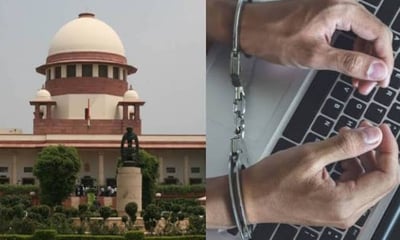
The highest court of the country has placed strict financial accountability on the banking system, ruling that banks cannot simply walk away when innocent depositors lose their hard-earned money to online criminals. The Supreme Court made it clear that whenever customer funds are stolen because a financial institution failed to perform necessary background verifications, monitor abnormal wire movements, or stop suspicious activities, the bank must pay back the victim. Judges noted that compensation should cover at least the entire amount lost by the citizen, establishing that customer protection must come before institutional excuses.
The legal proceedings took place before a three-judge bench led by Chief Justice Surya Kant, alongside Justice Joymalya Bagchi and Justice V Mohana. The bench was examining widespread digital scams, particularly digital arrest tricks where scammers impersonate police officers, tax agents, or judges over video calls to terrify victims into transferring large sums into fake bank accounts. Court records showed that even though overall scam volumes showed signs of dropping, citizens had still lost eight hundred crore rupees across the country in recent months alone.
During the hearing, the judges pointed out that digital frauds cannot operate in thin air because criminals depend entirely on real banking networks to receive and withdraw stolen cash. The court observed that organized syndicates open dozens of mule bank accounts in cooperative and commercial banks by using fabricated identities or tricking poor citizens. When banks open these accounts without checking addresses or matching physical records, they directly build the roads through which fraud takes place. The bench stressed that if an institution creates the vulnerability through careless work, it must bear the financial consequences when crime happens.
The top court instructed the Reserve Bank of India to put strict teeth into upcoming banking regulations. The judges announced that they will closely review the proposed Know Your Customer Amendment Directions, which are set to be officially notified before the end of November and operationalized across the banking sector by the end of December. The bench firmly questioned the central bank about what concrete penalties exist for branches that neglect safety rules, insisting that general advisory letters are no longer enough to stop financial crime.
To actively stop fraud in real time, the court ordered banks to deploy smart technological tools and artificial intelligence to spot unusual financial behaviors. For example, if a senior citizen who normally spends small amounts on groceries suddenly attempts to transfer several lakhs of rupees to an unknown beneficiary in another state, the bank system must instantly pause the transfer. The bench directed that banks must temporarily halt transactions that contradict a customer's regular history, alert the account holder immediately, and carry out physical or voice checks before releasing funds.
The court also expressed deep frustration and sadness over how educated individuals continue to fall into extortion traps despite widespread warning campaigns across newspapers and television networks. The Chief Justice wondered aloud why citizens still obey anonymous callers claiming to put them under arrest over phone screens when real law enforcement never conducts arrests through video chats. However, the court emphasized that personal fear and psychological manipulation by criminals cannot become an excuse for banks to wash their hands of institutional negligence.
Technology platforms and messaging services were also brought under scrutiny during the session. Legal representatives appearing for messaging applications informed the bench that internal safety algorithms had already blocked thousands of suspicious accounts linked to extortion rings and that new warning systems are being built into chat interfaces to alert users about risky contacts. The court noted that telecom providers, digital platforms, and banking servers must operate as a unified protective shield to protect regular citizens from cyber threats.
The ruling sets a major precedent for consumer rights and financial security in India. For millions of depositors who use internet banking, the judgment brings long-needed legal backing, establishing that ordinary people will not be forced to bear the losses when system gatekeepers fail to do their jobs. By fixing direct accountability on banks, the Supreme Court has made it clear that customer safety is a legal duty, not an optional corporate service.