
Supreme Court Protects Journalist Booked Under SC ST Act After Sexual Harassment Complaint Against Delhi Police Officer
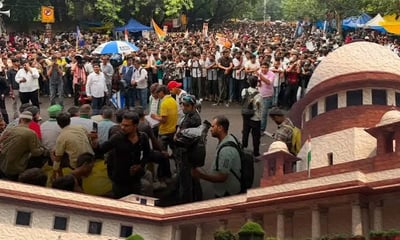
The Supreme Court of India has stepped in to shield an independent woman journalist from immediate arrest and police action in a high-profile criminal case. The top court directed law enforcement authorities not to take any coercive steps against the reporter, who was booked under the Scheduled Castes and Scheduled Tribes Prevention of Atrocities Act. The counter-complaint had been registered on the grievance of a senior Delhi Police officer whom the journalist had originally accused of sexual harassment, molestation, and physical assault while covering public demonstrations in the national capital.
The legal protection was granted by a division bench comprising Chief Justice of India Surya Kant and Justice Joymalya Bagchi. The judges issued the protective order while hearing a series of petitions concerning the safety of media professionals and the heavy-handed policing witnessed during recent street demonstrations across central Delhi. The matter brought intense focus onto how easily criminal laws can be weaponized against citizens and field reporters who attempt to hold law enforcement personnel accountable for misconduct.
Appearing on behalf of the woman journalist, Senior Advocate Indira Jaising presented a disturbing account of police retaliation to the bench. She told the court that her client had been subjected to severe physical manhandling and molestation by an Assistant Commissioner of Police while reporting on the ground. Jaising explained that when the victim approached local police authorities to file a formal First Information Report against the offending officer, the police refused to register her complaint and turned her away.
Instead of facing an internal inquiry or formal investigation, the accused police officer turned around and initiated legal proceedings against the reporter. The officer alleged that the journalist had used casteist slurs and derogatory remarks against him during the scuffle, prompting authorities to entertain a complaint under the strict provisions of the anti-atrocities law. Jaising strongly condemned the move as a blatant abuse of special protective statutes designed to shield vulnerable communities, arguing that it was deployed as a retaliatory weapon to crush a legitimate sexual harassment complaint.
The senior lawyer urged the bench to recognize the deep conflict of interest when police officers investigate their own colleagues. Jaising argued that the police force cannot be allowed to act as judges in their own cause, as that destroys any possibility of an impartial probe. She demanded that the investigation be removed from the hands of the Delhi Police and handed over to an independent committee set up to examine sexual harassment complaints made by women journalists reporting from protest grounds.
Solicitor General Tushar Mehta, representing the government and police authorities, urged the bench not to issue sweeping blanket orders without hearing a detailed reply from the administration. While acknowledging that the sexual harassment allegations raised by the reporter were serious, he cautioned that protest grounds often see people making social media reels rather than carrying out traditional journalism. He suggested that the journalist should cooperate with the ongoing inquiry while receiving protection from arrest, an offer that Jaising firmly rejected by insisting that the accused police machinery cannot investigate itself.
Addressing the broader argument about media freedom on the ground, Justice Joymalya Bagchi and the Chief Justice observed that defining legal protections across different categories of media workers involves important questions. The bench noted that courts will need to examine the layers of safeguards required for accredited journalists, independent freelance reporters, and digital content creators who report on public events. However, for the immediate case before them, the judges made it clear that the reporter must not face coercive police measures.
The judicial intervention has brought significant relief to independent media organizations and rights activists who have raised alarms over the targeting of ground reporters. Press freedom groups pointed out that turning serious criminal laws against women who report sexual misconduct creates a chilling effect that prevents journalists from doing their jobs safely. With the top court barring coercive action, the focus now turns to whether the Delhi Police will be compelled to register a fair case against the accused officer and submit to independent scrutiny.