
Supreme Court Questions Prime Minister Control Over Election Commissioner Appointments
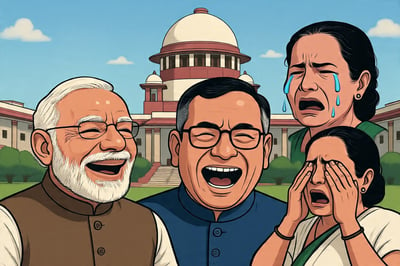
The Supreme Court of India recently took a firm stand on the fundamental requirements of a healthy democracy, stating that free and fair elections are only possible when the individuals overseeing them are genuinely independent. During a hearing in May 2026, the bench led by Justice Dipankar Datta expressed deep reservations about the current mechanism used to appoint the Chief Election Commissioner and other Election Commissioners. The top court pointed out that the current selection committee, which includes the Prime Minister, a Union Cabinet Minister, and the Leader of the Opposition, appears to be heavily tilted in favor of the executive. The judges questioned how a Cabinet Minister, who is part of the government, could be expected to act independently or disagree with the Prime Minister during the selection process. This setup effectively creates a two-to-one majority for the ruling government, potentially turning the selection of India’s top poll officials into a one-sided affair.
This legal battle centers on the 2023 Act passed by Parliament, which changed the rules for these high-level appointments. Before this law, a Constitution Bench of the Supreme Court had ruled in the Anoop Baranwal case that the selection panel should include the Chief Justice of India to maintain a balance of power. However, the government replaced the Chief Justice with a Cabinet Minister. The court observed that for an institution as vital as the Election Commission, it is not enough to simply be independent on paper; it must also appear independent to the public. If the selection process itself looks biased, it can erode the trust of millions of voters. The bench emphasized that the executive cannot "call the shots" when it comes to the very body that is supposed to hold them accountable during an election. The court suggested that having at least one truly neutral person on the panel is essential to protect the basic structure of the Constitution.
Critics of the current law argue that the role of the Leader of the Opposition has become merely ornamental. Since the two government members can outvote the opposition member, the appointment process risks becoming a formality. There are also concerns regarding the transparency of the "Search Committee" that shortlists candidates. In some instances, names were reportedly shared with the opposition just hours before the final meeting, leaving almost no time for a proper review. This lack of consultation undermines the spirit of a collaborative democracy. While the government argues that IAS officers and experienced administrators are capable of being neutral regardless of who appoints them, the court remains skeptical. The judiciary feels that the independence of the Election Commission is just as critical as the independence of the courts themselves, as both are guardians of the law.
The resolution of this case will have a lasting impact on how India conducts its future polls. If the Supreme Court decides to strike down the current selection process or mandate the inclusion of a neutral member like the Chief Justice, it would be a massive win for institutional autonomy. On the other hand, if the current system stays, the burden will be on the appointed commissioners to prove their neutrality through their actions on the ground. A truly independent poll body is the only way to ensure that every vote counts and that the government of the day does not have an unfair advantage. As the legal proceedings continue, the eyes of the nation are on the judiciary to see if it will step in to restore the balance of power and safeguard the sanctity of the ballot box.