
Supreme Court Takes Up Ram Mandir Donation Row To Review Massive Cash Embezzlement Allegations
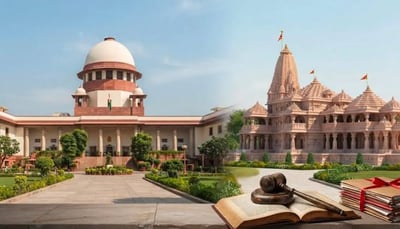
The apex judicial body of India is stepping directly into one of the most spiritually and politically sensitive financial controversies of recent times. On July 13 2026, a high level bench of the Supreme Court, led by Chief Justice of India Surya Kant alongside Justices Joymalya Bagchi and V Mohana, officially took up a batch of public interest litigations. These legal petitions are demanding a time bound, multi agency investigation into the alleged systematic pilferage and embezzlement of massive cash offerings at the newly built Ayodhya temple. Devotees across the globe have expressed deep emotional shock as multiple petitioners, including practicing advocates Ajay Kumar Rai and Dinesh Kumar Yadav, alongside lawmaker Sudhakar Singh, approached the court to demand that the Central Bureau of Investigation take charge of the probe. The legal actions specifically highlight that standard state level security mechanisms have entirely failed to protect public trust and safeguard billions of rupees contributed by everyday citizens.
The underlying controversy originally exploded into the public domain following an operational security breakdown within the dynamic cash counting operations managed by the Shri Ram Janmbhoomi Teerth Kshetra Trust. A preliminary inquiry launched by a local state team exposed alarming gaps in standard operating procedures, including a blatant absence of regular security frisking at crucial exit gates and an extreme lack of strict uniform rules for counting personnel. A detailed review of around 70 specific instances recorded on electronic security feeds caught multiple contracted workers systematically concealing heavy wads of currency inside their personal apparel, pockets, and footwear between April 27 and June 5. Local enforcement units have already placed 8 separate individuals under formal arrest, recovering close to 79.85 lakh rupees in pure cash from their private custody. The ongoing probe took a highly dramatic turn when investigators found that Ram Shankar Yadav, a private driver previously employed by a top official of the trust, held unauthorized duplicate keys to several heavy donation deposit containers.
The escalating legal battlefield sheds light on the inherent friction that exists between administrative oversight and public accountability in managing sacred institutional wealth. Even though the Uttar Pradesh state government acted quickly to form a specialized investigative body on June 13 to defuse the growing public anger, the petitioners argue that a basic administrative group lacks the complex forensic skills required to unearth deep rooted financial networks. Critics have pointed out that the state team originally initiated its fact finding process without registering a formal first information report, which could legally weaken the validity of the collected proof during future court trials. A previously ignored internal audit report from 2020 had explicitly warned the top management of highly unprofessional asset tracking systems, but the advice apparently sat unaddressed while the total volume of paper cash donations reached an estimated 3500 crore rupees. The current situation underscores the urgent necessity for professional central interference to preserve key electronic logs and ensure that high ranking temple administrators are not protected from deep legal accountability.
The final judicial resolution of this monumental row holds immense historic weight for the religious and administrative future of major public endowments throughout the nation. In addition to calling for immediate criminal prosecution, the legal pleas are pushing the court to enforce a comprehensive, independent forensic audit of all dynamic cash trails, gold block offerings, and digital transactions from the day the trust was formed. The petitioners are urging the apex court to mandate a comprehensive national transparency framework that forces all prominent public shrines to publish fully audited balance sheets directly on their public web portals. With key building officials openly describing these severe collection discrepancies as a deep stain on the religious devotion of millions, the court faces the massive task of balancing sentiment with cold legal standards. If the Supreme Court decides to step in and enforce strict independent supervision, it will set a highly transformative legal precedent that guarantees absolute transparency for religious collections across the entire country.