
US Charges Lawrence Bishnoi And Goldy Brar For Hardeep Singh Nijjar Killing In Canada
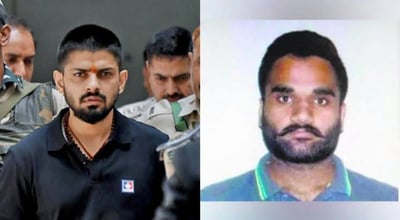
The complex geopolitical dispute surrounding the June 18, 2023 assassination of Khalistani separatist Hardeep Singh Nijjar took a dramatic turn on July 7, 2026, as the United States Department of Justice unsealed a sweeping federal indictment in Los Angeles. The court documents officially charge imprisoned Indian gangster Lawrence Bishnoi and his fugitive North American lieutenant Satinderjeet Singh, popularly known as Goldy Brar, with orchestrating and ordering the fatal shooting outside a Sikh temple in Surrey, British Columbia. This major legal development emerged as part of Operation Hard Ball, a highly coordinated, multinational law enforcement offensive executed simultaneously across the United States, Canada, and Europe. The massive crackdown has targeted 3 transnational syndicates, resulting in indictments against 37 defendants and the direct arrest of 24 individuals, including 11 suspects apprehended in California. US federal prosecutors allege that Lawrence Bishnoi managed to direct this high-profile targeted killing from his secure prison cell in India by using smuggled mobile phones, through which he provided co-conspirators with physical photographs and precise tracking addresses of the victim.
The official unsealing of these criminal charges sheds clear light on the sophisticated operational networks of India-based organized crime groups operating far beyond domestic borders. According to the federal indictment, the broader criminal enterprise regularly weaponized high-profile acts of violence to terrorize and extort wealthy members of the Indian diaspora worldwide, while simultaneously financing international narcotics trafficking operations that smuggled over 1146 pounds of cocaine into the Los Angeles region. However, an objective review of the specific legal text reveals a highly significant detail that completely alters the ongoing international political narrative. The extensive American indictment contains absolutely no allegations linking the government in New Delhi to the contract killing. This crucial omission provides a distinct contrast to the highly controversial stance maintained by former Canadian Prime Minister Justin Trudeau, who previously sparked a deep diplomatic standoff in late 2023 by claiming his intelligence agencies possessed credible links tying Indian state agents to the execution of the designated terrorist.
Analyzing the unfolding diplomatic ripples of Operation Hard Ball reveals a fascinating shift in how Western allies are handling transnational syndicates without fracturing essential strategic relationships. For nearly 3 years, the bitter diplomatic rift between Ottawa and New Delhi led to tit-for-tat expulsions of 6 high-ranking diplomats from each side and heavily disrupted bilateral trade talks. By establishing that the assassination was ordered and commercialized by a sophisticated criminal cartel rather than directed as a matter of Indian state policy, the American judicial system has effectively provided a neutral exit route for this prolonged international standoff. This factual clarification fits neatly into the recent diplomatic resetting observed under the current Canadian administration led by Prime Minister Mark Carney, where Ottawa has steadily signaled a desire to move past the initial explosive rhetoric and rebuild structural security ties with New Delhi. It shows that while deep security concerns regarding transnational crime remain valid, attributing gangland violence directly to sovereign state intelligence requires an exceptionally high threshold of verified legal proof.
Ultimately, this global multi-agency operation demonstrates that Western law enforcement is no longer willing to tolerate foreign gang warfare playing out on their domestic soil. First Assistant United States Attorney Bill Essayli emphasized during a formal press conference that international coalitions are fully determined to dismantle these syndicates completely, warning that there is no safe harbor anywhere in the world for these entities. As the legal proceedings move forward through the United States federal court system, the focus will now shift to navigating the complex extradition dynamics required to bring these international fugitives and jailed masterminds to a unified trial. The historical resolution of this high-stakes investigation proves that while political headlines often lean toward sensational state-sponsored espionage theories, the reality frequently traces back to the sprawling, lucrative networks of global organized crime. By separating geopolitical posturing from hard criminal evidence, this multi-country crackdown lays a clear baseline for how international law enforcement will cooperate to secure diaspora communities across the globe.