
Three Indian Sailors Killed As US Navy Strikes Ships Off Oman Coast Triggering Fierce Diplomatic Row
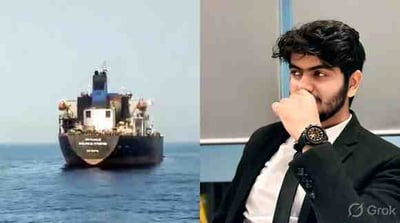
Maritime safety and international relations have faced severe disruption following a sequence of aggressive military interventions in the Middle East. Over a span of four days in June 2026, the United States Navy launched direct targeted strikes against three separate merchant vessels carrying predominantly Indian crew members off the coast of Oman. The situation escalated drastically when the Palau-flagged oil tanker MT Settebello was hit, resulting in the tragic deaths of three Indian seafarers on board who were initially reported missing before their bodies were located and identified. This rapid military escalation introduces a highly dangerous phase of geopolitical volatility near the crucial Strait of Hormuz shipping corridor. The open deployment of firepower by Western forces against commercial shipping lines represents a severe escalation, fundamentally shifting regional tensions into a direct confrontation involving international seafaring communities.
The operational details provided by military commands reveal a systematic campaign to strictly enforce economic boundaries in the region. According to statements from the United States Central Command, the targeted vessels were blocked while attempting to breach a strict naval blockade imposed around Iranian ports. The sequence of events began when an F-18 fighter jet from the aircraft carrier USS Abraham Lincoln fired a precision munition to disable the Palau-flagged tanker MT Marivex after the crew allegedly failed to comply with steering directions. This initial strike was quickly followed by the fatal attack on the MT Settebello, and a subsequent strike on a third vessel, the Guinea-Bissau-flagged tanker MT Jalveer, which carried 20 Indian nationals. New Delhi maritime officials confirmed that while none of these vessels were physically owned by Indian entities, the presence of vulnerable domestic labor on sanctioned or non-compliant hulls has placed local citizens directly into an active line of fire.
An objective look at this naval conflict exposes a severe miscalculation by Western strategic forces regarding the human cost of blockade enforcement. While Washington maintains a legal right to administer financial penalties and restrict compliance violations, resorting to lethal airstrikes against unladen commercial tankers carrying neutral foreign workers completely crosses the line of standard international policing. This heavy handed approach has been strongly condemned by regional observers, with neighboring diplomatic offices labeling the behavior as state piracy. The decision to prioritize aggressive containment over maritime warning protocols has needlessly cost the lives of three innocent mariners—identified as Aditya Sharma, Suresh Patnala, and Shivanand Chaurasiya. By opting for kinetic destruction rather than relying on standard coast guard interceptions, the US Navy has set a highly problematic precedent that directly threatens the broader safety of global commercial navigation.
Resolving this explosive diplomatic crisis requires an immediate halt to kinetic strikes on merchant vessels and a swift return to multilateral maritime communication. Following the fatal incident, the Ministry of External Affairs in New Delhi immediately summoned US Charge d'Affaires Jason Meeks to deliver a strong diplomatic note of protest, demanding an absolute end to these unchecked military actions. The Indian government has also announced an immediate financial relief package of 10 lakh rupees for the families of the deceased seafarers while coordinating emergency evacuations for the remaining stranded crew members. If the United States refuses to coordinate its blockade strategies with neutral trading nations, the stability of international supply chains will suffer massive structural damage. This tragic incident serves as an ultimate warning that without a clear framework for diplomatic de-escalation, global trade routes will become increasingly dangerous zones for civil transport.