
Umar Khalid Denied Interim Bail For Mother Surgery Despite Supreme Court Reaffirming Bail Is The Rule And Jail Is The Exception Under UAPA
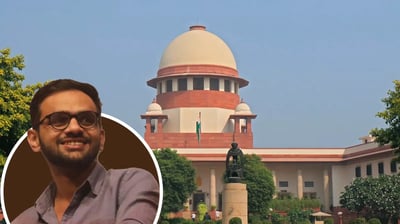
The Karkardooma sessions court in Delhi has officially dismissed an interim bail application moved by jailed student activist Umar Khalid, who sought a brief fifteen day release on compassionate grounds. Additional Sessions Judge Sameer Bajpai rejected the application after determining that the personal and domestic justifications presented by the defense were legally insufficient to warrant temporary release. Khalid, who has been in continuous judicial custody since September 2020 under the stringent Unlawful Activities Prevention Act for his alleged involvement in the 2020 northeast Delhi riots conspiracy, had petitioned the court to allow him to care for his ailing mother ahead of a scheduled medical procedure and to participate in the Chehlum mourning rituals of his deceased uncle. However, the trial court sided completely with the arguments of the state prosecution, ruling that the parameters for an exceptional emergency release had not been satisfied.
The defense counsel had presented a detailed humanitarian argument, outlining that Khalid is the only son in the family and is desperately needed to assist his seventy one year old father during his mother's upcoming lump excision surgery at a local multi speciality hospital. The plea further established that while Khalid has five sisters, four of them are married and reside away from the parental household, leaving the elderly parents with an inadequate immediate support network during the pre and post operative medical phases. The prosecution strongly resisted the application, presenting medical documentation to argue that the scheduled surgery was a routine and non life threatening procedure that could be comfortably managed by the existing family members without requiring the temporary release of a high profile prisoner. Ultimately, the sessions judge noted that the presence of other family members negated the absolute necessity of Khalid's presence, concluding that the grounds presented failed the basic benchmark of being reasonable or urgent.
The timing of this trial court denial is legally significant, occurring exactly one day after the Supreme Court of India issued powerful structural observations regarding the fundamental rights of prisoners held under anti terror legislation. A separate apex court bench comprising Justice BV Nagarathna and Justice Ujjal Bhuyan explicitly criticized previous conservative bail rulings, emphatically reiterating the core constitutional principle that bail is the rule and jail is an exception, even within complex prosecutions initiated under special statutes like the Unlawful Activities Prevention Act. The top court pointed out that binding judicial precedents establish that prolonged pretrial incarceration and systemic delays in commencing a trial can legally override the strict statutory bars contained within special security laws. The apex court reminded the lower judiciary that the presumption of innocence remains the cornerstone of a civilized legal system and that bail mechanisms should not be converted into an empty statutory slogan or a form of premature punishment.
This distinct disconnect between the constitutional directives of the apex court and the rigid operational decisions of local trial courts exposes a deep systemic friction within the Indian criminal justice apparatus. While the highest court repeatedly emphasizes that basic personal liberty and Article 21 protections must extend to individuals enduring years of imprisonment without a completed trial, lower courts continue to evaluate interim requests through an incredibly narrow, hyper technical lens. Denying a temporary two week release to a prisoner with an unblemished record of compliance during past interim breaks suggests that lower judicial benches remain hesitant to apply the liberal spirit of the law when navigating high profile security indictments. This pattern of prolonged detention without trial effectively transforms the process itself into a severe systemic penalty, highlighting a profound structural gap between progressive apex jurisprudence and the ground level realities of lower court administration.