
United Nations Condemns Israeli Threat to Expel Gaza Residents Over Kite Flying as Human Rights Office Slams Collective Punishment
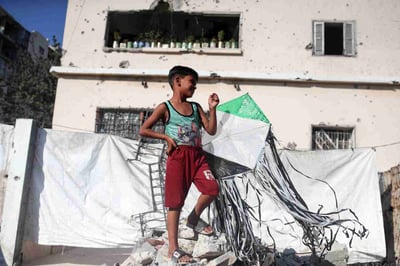
The United Nations has issued a sharp condemnation following statements by senior Israeli officials threatening to forcibly displace Palestinian residents from areas in the Gaza Strip where kites and balloons are launched across the perimeter fence. Speaking from the United Nations headquarters in Geneva, human rights officials characterized the proposed collective punishment as an outrageous escalation that directly contravenes established global conventions on civilian protection. The international body expressed grave alarm over rhetoric coming from top political leaders, warning that using the actions of children to justify mass civilian expulsions constitutes an unacceptable breach of international humanitarian law.
The diplomatic backlash follows a joint declaration issued by Israeli Prime Minister Benjamin Netanyahu and Defence Minister Israel Katz, who warned that the military would intensify operations and evacuate entire civilian populations from designated neighborhoods if launches of kites, small drones, and balloons into Israeli territory continued. Israeli security officials claimed that several kites had landed in agricultural areas and military outposts near the border, alleging that Palestinian groups were testing surveillance responses. While historical tensions have involved incendiary devices, authorities confirmed that the recent kites carried no explosives or hazardous payloads.
The United Nations Human Rights Office responded forcefully to the ultimatum, with spokesperson Ravina Shamdasani stating at a press briefing that threatening civilian communities with mass eviction over flying kites demonstrates complete contempt for international legal safeguards. The rights office emphasized that international law strictly prohibits the forced transfer or mass deportation of protected civilian populations in occupied territories, noting that targeting non-combatants with punitive displacement amounts to serious violations that rise to the level of atrocity crimes.
Palestinian representatives and civil society groups in Gaza dismissed the security claims, stating that the kites were flown by young children seeking recreation and expression in ruined neighborhoods following months of extensive bombardment and displacement. Human rights monitors noted that children in Gaza frequently fly paper kites from open beaches and rubble-filled streets, often carrying handwritten messages of protest and hope. Officials in Gaza accused the Israeli government of fabricating a pretext to justify fresh airstrikes and further contract the narrow residential zones available to displaced families.
The controversy unfolds against the backdrop of an exceptionally fragile humanitarian situation inside the besieged coastal enclave. Despite international mediation efforts and declared pauses in hostilities, residents across central and southern Gaza continue to face regular drone surveillance, targeted strikes, and acute shortages of basic necessities, including clean drinking water, electricity, and essential medical supplies. United Nations field agencies reported that another cycle of forced evictions would cause catastrophic disruption for thousands of families already living in overcrowded tent encampments.
Humanitarian legal scholars point out that collective punishment is explicitly prohibited under Article 33 of the Fourth Geneva Convention, which states that no protected person may be punished for an offense they have not personally committed. Legal experts stress that state military forces cannot lawfully displace entire civilian neighborhoods on the grounds that individuals or children within those geographic boundaries launched harmless objects across a security fence. The United Nations urged third-party governments and international partners to apply diplomatic pressure to ensure full adherence to international legal norms.
The sharp warning from the human rights office reflects mounting frustration within the international community over the treatment of civilians in ongoing conflicts across the Middle East. With humanitarian agencies struggling to distribute food and medical aid under severe access restrictions, foreign policy analysts warn that normalizing forced evictions over non-violent activities will further erode international accountability and undermine global human rights frameworks.