
US Midterm Election Results Impact on US China Relations as Democrats Gain Control of Congress
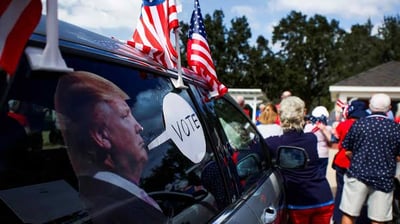
The sweeping victory for the Democratic Party in the United States midterm elections has created a fresh turning point for global diplomacy, directly influencing the complex relationship between Washington and Beijing. By securing control of the United States Congress, lawmakers from the Democratic Party now hold substantial constitutional authority to challenge, question, and restrict the unpredictable foreign policy decisions of President Donald Trump. For the leadership in China, this major shift in the American legislature opens up both new strategic openings and complicated diplomatic hurdles as the two global superpowers navigate trade, technology, and regional security.
At the center of immediate interest is whether a newly empowered legislative branch will place limits on President Trump's aggressive trade measures. During his presidency, Donald Trump relied heavily on unilateral executive authority to impose sweeping import tariffs on hundreds of billions of dollars worth of Chinese goods. With the Democratic Party taking charge on Capitol Hill, business leaders and economic observers are watching closely to see if lawmakers will use committee hearings, trade review panels, and budget controls to slow down sudden tax increases on imported products that raise consumer prices for everyday American households.
While lawmakers may seek to temper sudden tariff escalations, experts warn that Beijing should not expect an automatic return to easy trade relations. In Washington, skepticism toward China's economic model, state subsidies, and intellectual property practices enjoys strong bipartisan support across both political parties. Even as Democrats challenge the White House on specific tactical measures, many congressional representatives share the broader goal of reducing American economic dependence on foreign manufacturing and protecting domestic industrial jobs.
The contested island of Taiwan represents another critical flashpoint that could reshape the diplomatic environment between the two powers. Earlier discussions were thrown into uncertainty after President Trump suggested that American arms supplies to Taiwan could serve as a potential bargaining chip during trade negotiations with Beijing, leading his administration to hold back a planned fourteen billion dollar batch of defensive weapons. Foreign policy analysts point out that a Democratic-controlled Congress is likely to increase political pressure on the White House to release those pending defense packages, a step that would draw sharp pushback from Beijing.
At the same time, foreign affairs specialists note that a determined stance from the American legislature could encourage Chinese authorities to handle regional questions with greater caution. Foreign policy scholars, including Steve Tsang of the SOAS China Institute, point out that renewed legislative backing for Taipei from Capitol Hill could give Beijing a strong incentive to avoid unnecessary escalation. However, legal observers note that while Congress can draft and approve legislation directing weapon sales, the president still maintains the executive authority to veto such measures or delay administrative execution.
Another major question is whether Chinese policymakers will view Donald Trump as a politically weakened leader during the remaining two years of his term. With the legislative branch firmly in opposition hands, a president often faces domestic gridlock and constant oversight investigations, limiting their freedom to move domestic legislation through Congress. While some strategists suggest that Chinese officials could use this period of internal American political division to apply stronger diplomatic pressure, international observers note that Beijing remains calculating and will be careful not to push so hard that it triggers unpredictable or extreme countermeasures from the White House.
The outcome of the midterm elections also holds significant consequences for global climate cooperation and international environmental agreements. Lawmakers in the Democratic Party have consistently pushed for active dialogue on clean energy transition, carbon emission cuts, and multilateral climate treaties. An active legislative push could open narrow channels for cooperative discussions between American and Chinese scientific teams, even as the two nations remain direct rivals in trade, artificial intelligence, and regional maritime influence.
Ultimately, the new political landscape in Washington ensures that American policy toward Beijing will face continuous debate and scrutiny rather than moving on executive orders alone. As both capitals prepare for the final two years of the presidential term, the ongoing struggle between the White House and Capitol Hill will play a decisive role in defining how the world's two largest economies manage their rivalry, avoid military miscalculations, and protect global stability.