
Venezuelan Oil Imports Will Refill US Strategic Petroleum Reserve to Counter Historic Stockpile Deficit Following Sweeping Energy Pact
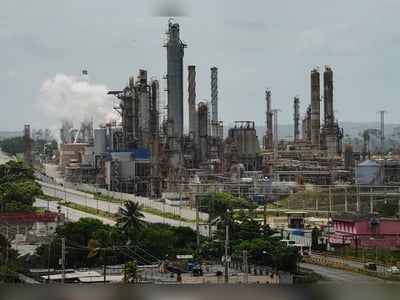
Deep underground along the Gulf Coast of Texas and Louisiana, massive hollowed-out salt caverns designed to safeguard the energy security of the United States are sitting at their emptiest levels in more than four decades. For generations, these subterranean storage chambers served as a vital cushion against sudden global shocks, price spikes, and overseas supply blockages. Today, with the emergency stockpile holding roughly 289.7 million barrels of crude oil, representing only about forty percent of its authorized capacity, American energy planners face a historic deficit. The depletion followed successive large-scale releases designed to calm domestic fuel prices and stabilize international markets during major geopolitical disruptions.
A dramatic shift in foreign policy and resource management has suddenly placed South American crude at the center of the plan to restore American energy independence. United States President Donald Trump announced that newly secured oil from Venezuela will be directed straight into the emergency salt caverns. Framing the arrangement as a historic turning point in bilateral relations, the American leadership described the incoming crude supplies as a generous gift from Venezuela to the people of the United States, promising that the physical topping out process of the Strategic Petroleum Reserve would begin in the near future.
The development represents a remarkable transformation for two countries whose diplomatic relations experienced years of intense hostility, heavy sanctions, and political isolation. The agreement was negotiated between senior Washington officials, including Secretary of State Marco Rubio and Defense Secretary Pete Hegseth, and the Venezuelan administration led by acting President Delcy Rodriguez. The pact establishes an expansive commercial and operational framework granting American entities direct access to seventeen major oilfields that sit atop an estimated sixty-five billion barrels of proven petroleum reserves across Venezuela.
Under the framework of the bilateral understanding, a newly formed joint operating entity involving an experienced private sector operator will oversee exploration, extraction, and modern production techniques across the designated basins. The arrangement reportedly grants the United States a fifty-five percent share of the effective commercial output through a blend of direct ownership stakes and the legal right to purchase crude oil at baseline production cost. Portions of this low-cost crude are designated specifically for the Strategic Petroleum Reserve and military logistics, creating a direct supply chain from Venezuelan extraction wells to American storage facilities.
For the government in Caracas, the agreement is presented as a vital lifeline to rescue an economy crippled by years of financial paralysis, industrial decay, and international isolation. Venezuelan leadership emphasized that the country retains sovereign ownership over its natural subsurface wealth while opening its doors to foreign technology, advanced machinery, and outside capital. Official projections released in Caracas suggest the multi-decade agreement could attract up to one hundred billion dollars in direct foreign investment into degraded energy infrastructure, while generating more than two hundred billion dollars in long-term tax revenues to fund public recovery programs.
Despite the optimistic announcements, energy specialists and industrial engineers point out that filling American salt caverns with Venezuelan crude will encounter immense practical obstacles. Venezuela sits on the largest proven crude reserves on the planet, yet its daily output has hovered near 1.2 million barrels, a fraction of its historical peak three decades ago. The nation suffers from decaying pipeline networks, corroded storage tanks, unreliable electrical grids, and a severe shortage of specialized drilling hardware, meaning that expanding daily extraction to the required scale will require years of sustained rehabilitation and heavy capital spending.
The technical composition of Venezuelan petroleum presents another major refining and logistics puzzle. Much of the nation’s wealth consists of extra-heavy crude sourced from the Orinoco belt, a dense and sticky substance that requires specialized blending with lighter diluents or dedicated upgraders before it can be transported through pipelines or stored safely inside salt caverns for long periods. While complex refineries along the American Gulf Coast are specifically engineered to process heavy grades, standard emergency reserve stockpiles traditionally require precise blends to ensure rapid withdrawal capabilities during national crises.
The sudden energy deal was finalized in late August 2026, triggering immediate domestic and international debate over sovereignty, accountability, and the future of global oil markets. Within the United States Congress, lawmakers quickly split along ideological lines. Supporters hailed the arrangement as a masterstroke of pragmatic resource diplomacy that doubles accessible reserves and protects consumers from volatile gasoline prices without burdening taxpayers. Critics in Washington voiced sharp skepticism, questioning the legal structure of the unnamed private operators, raising corporate governance concerns, and demanding formal legislative review over long-term strategic commitments.
Inside Venezuela, the scale of the concession has ignited passionate discussions among local economists, political figures, and civic organizations. While local businesses welcome the return of foreign capital, high-wage technical employment, and reliable supply contracts, critics argue that granting long-term operational control over national fields represents a sharp departure from historic resource nationalism. The interim administration has pushed back firmly against these concerns, maintaining that partnering with foreign operators is the only realistic method to revive a dormant industry and generate public revenue after years of economic distress.
As trading desks in Houston, London, and Singapore evaluate the emerging supply dynamics, the global energy landscape faces a fundamental realignment. If international drilling contractors and transport operators can successfully repair the broken transport corridors between the Caribbean coast and the Gulf of Mexico, the flow of oil could gradually lower import costs and rebuild critical strategic stockpiles. Yet between the political declarations in Washington and the physical arrival of millions of barrels into American caverns, the world is watching an intricate test of engineering, economics, and diplomacy unfold across the Western Hemisphere.