
What If Benjamin Netanyahu Takes Power Of Israel Again Will There Be 70000 More Killings And Will People Of Israel Allow One More Genocide ?
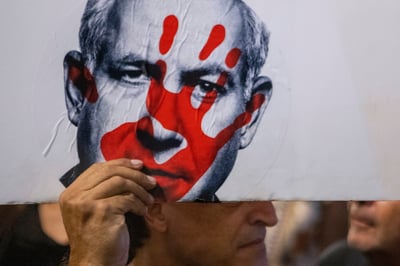
The latest national election count has pushed the entire country into an anxious political crisis as preliminary numbers show Prime Minister Benjamin Netanyahu struggling to secure the sixty-one seats needed to build a ruling government. While political figures inside the capital battle over tiny margins, families and communities across the region are asking much deeper, life-and-death questions. The past years of warfare have brought immense sorrow, flat rubble where homes once stood, and a staggering toll of human suffering. Now, as the counting continues, ordinary people are openly wondering what will happen if the current leader manages to take power again, and whether another seventy thousand innocent men, women, and children will be killed in an expanded wave of military strikes.
The fear of another chapter of mass civilian casualties has become the central topic in street discussions, neighborhood markets, and public forums. Citizens and international observers are questioning whether the people of Israel will quietly allow another campaign that critics and rights groups warn could turn into another genocide. The sheer scale of destruction already witnessed across Gaza and border areas has generated global outrage, leaving many local citizens horrified by the thought of unending violence. Anti-war voices, community organizers, and grieving relatives argue that true safety cannot be won through endless airstrikes, broken families, and thousands of newly dug graves.
At the very same time, the society remains deeply split over questions of national defense and border protection. A significant segment of the electorate continues to stand behind the prime minister, insisting that severe military force is the only measure that can prevent future attacks from outside armed groups. For these voters, stopping the army now feels like admitting weakness. This sharp contrast has divided the country straight down the middle. One half demands an immediate ceasefire, the safe return of all captives, and a genuine path to peace, while the other half fears that stepping back from aggressive military actions will put their own households at risk.
Inside the parliament, the political mathematics make forming any kind of government an uphill struggle. With eighty-five percent of the ballots counted, the coalition supporting the incumbent prime minister holds around fifty-three seats, leaving him well short of a functioning majority. Opposition leader Gadi Eisenkot heads a competing bloc that also commands dozens of seats, but neither side has a straightforward path to sixty-one. Because the margin is razor thin, small parties and individual lawmakers are suddenly holding enormous power, turning every hallway conversation into a high-stakes bargaining session over cabinet jobs and policy promises.
For the opposition to take office and prevent the prime minister from securing another term, they must confront a major dilemma of their own. The only mathematical possibility for Eisenkot to build a ruling coalition is to accept the backing of Palestinian and Arab political parties who won strong parliamentary representation. However, several conservative lawmakers inside the opposition coalition spent entire careers declaring that they would never form a partnership with Arab representatives. By refusing to drop that rigid stance, these rival politicians are erecting a self-made barrier to their own victory, handing the incumbent leader an unexpected chance to hold onto the top job.
While leaders argue behind closed doors, public anger is growing louder in the streets. Thousands of protesters are turning up outside government centers and public squares, beating drums, holding signs, and demanding immediate accountability for the catastrophic policies of recent years. Demonstrators are asking how long regular citizens are expected to watch their leaders pursue destruction rather than peace. Many young people say they refuse to let human lives be treated as expendable tools in a cynical political survival game, arguing that regular citizens must make their voices heard before more thousands of innocent people lose their lives.
Beyond the threat of further violence, the voting trends expose total exhaustion among the general public. Going through multiple national elections within just a few years has failed to solve runaway grocery costs, unaffordable rent, or the constant dread of sirens and rockets. Many working-class families feel that top officials operate in a completely separate world, untouched by the grief, financial pain, and trauma that everyday people experience. This repeated cycle of indecisive voting has created deep skepticism toward the entire political establishment.
The next few weeks will decide whether the political landscape can shift away from confrontation or remain locked in rigid habits. If neither side compromises, the nation could quickly fall into complete paralysis or face yet another round of national elections. Until a new government is officially sworn in, the prime minister stays in office as caretaker leader, controlling state institutions and the military during an unprecedented historical crossroad. The world is watching to see whether the people and their elected representatives will draw a line against further mass slaughter, or whether political maneuvers will allow the same cycle of bloodshed to keep going.