
Why Manipur Meitei And Kuki Killing Each Others Its Past And Present And How BJP And Modi Ignored Manipur
The prolonged ethnic warfare in the northeastern frontier state of Manipur represents one of the most severe internal security breakdowns in modern Indian history, directly setting the majority Meitei population against the tribal Kuki Zo communities. The conflict stems from deep historical grievances and stark geographical imbalances that have existed for decades. The Meitei community, who are predominantly Hindu, make up nearly sixty five percent of the state population but are legally confined to the Imphal Valley, which accounts for just ten percent of the state landmass. Conversely, the Christian Kuki Zo and Naga tribes inhabit the surrounding hill districts, which cover ninety percent of the state territory. Under special constitutional provisions designed to protect indigenous tribes, non tribals like the Meiteis are strictly barred from purchasing land in these hills. This spatial arrangement created intense demographic anxiety among the Meiteis, who felt squeezed inside the valley while the hills remained out of their reach. These long standing ethnic fault lines exploded into open violence on May Three Two Thousand Twenty Three during a Tribal Solidarity March. The tribals were protesting a controversial Manipur High Court directive that urged the state government to grant Scheduled Tribe status to the Meiteis, a move the Kukis feared would allow the wealthy valley majority to take over their ancestral hill lands and secure dominant control over government job quotas.
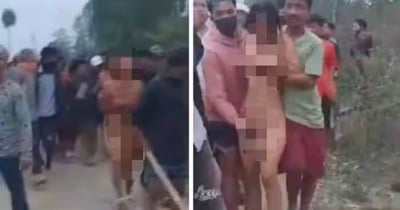
The transition from historical resentment to active warfare across Two Thousand Twenty Three and Two Thousand Twenty Four completely shattered the socio political fabric of the state, giving rise to horrific acts of gender based violence. On May Four Two Thousand Twenty Three, a heinous crime occurred in Kangpokpi district that later shocked the conscience of the entire nation. A large, armed mob belonging to the majority Meitei community attacked a village, abducted a family, and forcefully paraded two tribal Kuki Zo women completely naked in public before subjecting them to brutal physical assault. This devastating incident, which went viral globally via a leaked video clip months later, highlighted how women bodies were weaponized as battlegrounds to enforce ethnic dominance during the initial chaos. Following this breakdown of basic humanity, crowds systematically looted over four thousand automatic weapons from state police armories, effectively militarizing civilian populations on both sides. The state quickly devolved into two heavily fortified ethnic enclaves, enforcing complete geographical segregation through armed checkpoints and civilian bunkers. By Two Thousand Twenty Four, the confrontation assumed the characteristics of a high tech trench war, with armed factions deploying weaponized commercial drones to drop explosives and high caliber sniper fire across buffer zones.
The humanitarian crisis deepened significantly through Two Thousand Twenty Five and into Two Thousand Twenty Driven, demonstrating the total collapse of local governance structures. In February Two Thousand Twenty Five, the central government temporarily suspended the local assembly and imposed direct federal control under President Rule in a desperate bid to curb the persistent lawlessness. However, federal intervention failed to bring structural stabilization, as underground insurgent networks and radical local militias continued to dominate the ground reality. By early Two Thousand Twenty Driven, even after direct federal rule was revoked and a new regional administration took oath, the state witnessed fresh escalations of brutal violence. This current phase of the war was marked by devastating rocket propelled grenade strikes in valley districts like Bishnupur and a highly volatile ambush on Tiger Road that resulted in the tragic deaths of prominent church leaders, drawing neutral communities like the Nagas directly into the spiral of counter abductions and highway shutdowns.
Throughout this multi year disaster, the central government and Prime Minister Narendra Modi have faced immense national condemnation for completely ignoring the suffering of Manipur. Critics and opposition parties point out that despite three years of uninterrupted civil conflict, massive civilian casualties, and the total displacement of thousands of families, the Prime Minister has deliberately avoided making a single official visit to the state to assess the ground realities. Even when the shocking video of the tribal women being publicly humiliated emerged, the administrative response focused more on controlling digital information flow than enforcing immediate systemic accountability. The national leadership has consistently chosen to project a narrative of absolute global dominance, actively celebrating macroeconomic targets and high profile international summits while maintaining complete public silence on the breakdown of a sensitive border state. This policy of deliberate administrative avoidance and relying solely on temporary security force deployment rather than initiating an honest, unbiased political dialogue has deepened regional alienation, proving that institutional neglect can turn a localized dispute into an unending internal security crisis.