
6.5 crore Indian voters deleted, are all Nepali & Bangladeshi? Supreme court fails to protect fundamental rights of 6.5 crore Indian people
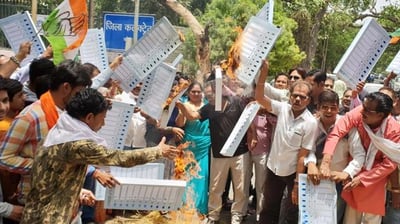
The democratic foundations of the country are experiencing a massive shockwave following the explosive revelation that nearly 6.5 crore voters have been removed from the draft electoral rolls. This unprecedented purge took place across nine states and three Union Territories, which previously held a massive combined strength of 50.9 crore electors before the second phase of the Special Intensive Revision commenced. The sheer scale of these deletions has sent deep shockwaves through the political landscape, leaving millions of anxious citizens wondering if their names are still intact. While official election channels maintain that the revision is a routine administrative clean up to eliminate duplicate, deceased, and permanently shifted entries, the staggering drop has triggered intense public anxiety over widespread citizen disenfranchisement.
As news of the massive deletion spread, severe questions emerged regarding the true identity of those who have been struck off the voting registers. Public corridors are filled with sharp questions asking if these 6.5 crore individuals are actually illegal immigrants from neighboring countries like Bangladesh and Nepal, or if genuine Indian citizens are being targeted to alter coming election outcomes. Critics point out that instead of conducting meticulous, error free door to door verification, the process has heavily relied on automated database matching tools. This has resulted in the arbitrary removal of legitimate residents, migrant laborers, and economically marginalized communities who lack the resources to track their names or re register before deadlines.
The ruling dispensation faces heavy accusations of executing a calculated electoral strategy, allegedly using the institutional machinery of the Election Commission under Chief Election Commissioner Gyanesh Kumar to secure victories at all costs. By systematically reducing the voter base in specific regions and demographic pockets, the institutional process is being viewed by many not as a clean up, but as a deep administrative manipulation. This aggressive approach completely shifts the heavy burden of proof onto the poor and uneducated citizen, who must now run from pillar to post to prove their nationality and residence, effectively weakening the foundation of universal adult franchise.
In the middle of this escalating democratic breakdown, the highest judicial institution of the country faces intense public anger for its apparent inaction. The Supreme Court of India is being heavily criticized for failing to step in as a robust guardian of the Constitution and the fundamental rights of its people. By allowing these massive draft roll deletions to proceed without demanding strict accountability or ordering an immediate halt to flawed methodology, the apex court has left millions of citizens vulnerable to institutional overreach. As the revision process continues to expand into more states, the survival of clean elections depends entirely on how quickly local communities and legal watchdogs can mobilize to fight this systemic exclusion.