
Adani Group Captures Major Coal Power Contracts In BJP Ruled States Securing 13.27 Lakh Crore Revenue Over 25 Years
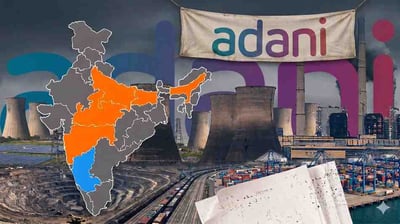
The Indian energy landscape has shifted significantly following the resumption of long term coal power purchase agreements. Investigative findings reveal that the Adani Group has emerged as the primary beneficiary of these contracts securing a projected revenue pipeline exceeding 13.27 lakh crore over the next 25 years. Between March 2024 and January 2026 state governments issued 12 major long term electricity procurement tenders to secure future supply. Out of these contracts 8 were floated by states governed by the Bharatiya Janata Party and the Adani Group successfully bagged every single one of them either as the sole developer or alongside multiple awardees. The structural shift marks a major return to multi decade fossil fuel commitments after a nearly decade long pause in long term state backed coal contracts across the country.
The distribution of these multi billion crore contracts spans across multiple key regions including Uttar Pradesh Madhya Pradesh Bihar Maharashtra and Assam. In Uttar Pradesh a 1,600 megawatt contract is estimated to bring in 1.40 lakh crore while Madhya Pradesh awarded a similar 1,600 megawatt deal valued at 1.50 lakh crore. Bihar issued a 2,400 megawatt contract translating to a massive 2.40 lakh crore in long term revenue. The pattern across these regions demonstrates a high level of uniformity in how state utilities are securing future thermal power capacity. In contrast when opposition ruled states like West Bengal issued comparable tenders during the same period the business group either backed out of the final bidding stages or faced a completely different competitive environment. The stark difference in outcomes between regions has drawn massive attention from market observers tracking infrastructure distribution.
A deeper look at the procurement frameworks indicates that specific structural adjustments within the bidding documents may have influenced the highly concentrated outcomes. In states like Maharashtra and Rajasthan utilities introduced a unique bundling mechanism that required a single developer to supply massive capacities of both thermal and solar energy in tandem. While the integration of renewable energy with conventional power is designed to manage clean energy transition goals it simultaneously created a massive entry barrier for smaller entities. In a market where independent power producers usually specialize in either clean energy or thermal generation combining the two requirements effectively eliminated the vast majority of local competitors. Consequently the massive baseline criteria closely mirrored the exact operational setup and multi state expansion blueprints of India largest private power producer leaving very few eligible bidders at the final evaluation table.
The creation of these long term monopolies raises valid questions regarding the financial implications for state electricity boards and end consumers over the next two decades. Restricting competitive tension during the initial bidding phase can often prevent state utilities from discovering the absolute lowest possible tariff rates for electricity supply. In some instances like in Assam state authorities agreed to long term payment frameworks for energy capacities that exceed local demand projections by a wide margin potentially risking significant financial strain on public distribution companies. While locking in massive long term power supplies ensures grid stability for rapidly growing industrial hubs it also binds state exchequers to high fixed costs for decades. As these multi phase projects move from development into active transmission the balance between corporate profitability and affordable public utility rates will remain a critical focal point for economic analysts.