
Congress Gift To Karnataka Telangana Now Kerala In List Of Free Bus For Women Through Priyadarshini Scheme Launch
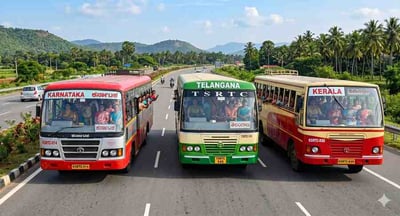
The grand expansion of public transport welfare has reached a new milestone in southern India as Kerala officially joins the ranks of states providing fare free transit. Chief Minister VD Satheesan inaugurated the flagship Priyadarshini free bus travel scheme at the Thampanoor Central Bus Station in Thiruvananthapuram. To mark this historic transition, the maiden journey toward the Secretariat was managed entirely by an all women crew, featuring veteran conductor Jayakumari and the first institutional woman driver of the corporation, PP Sheela. This rollout marks the rapid fulfillment of a major pre election guarantee within 30 days of the new United Democratic Front administration taking charge. By introducing this program, the political leadership replicates its successful transport welfare models previously established in neighboring territories to ease the monthly expenditure of millions of commuting citizens.
The operational layout of the newly introduced program guarantees universal access for all women and transgender individuals, bypassing any restrictive filters related to age, social standing, or family income. The benefit applies directly to 3125 ordinary services run by the Kerala State Road Transport Corporation, encompassing city ordinary, standard ordinary, town to town, and rural Gramavandi networks. To maintain complete ease of access, commuters are exempted from submitting physical applications, undergoing digital registrations, or presenting specialized identity cards before boarding. Passengers simply enter any eligible ordinary bus and request a zero fare ticket from the conductor. The deployment of electronic ticket machines ensures that these zero value receipts log real time travel data, allowing the state to maintain clear accounting records for tracking passenger patterns and calculating structural subsidies.
From a structural standpoint, the direct savings generated by eliminating daily transit costs function as a powerful economic catalyst for working households. Low income commuters, female workers, and local vendors can now redirect up to 25 percent of their personal budgets that were previously exhausted on daily transport. Instead of liquidating these funds, women are positioned to save these amounts in formal banking channels or invest them directly into micro enterprises, higher education, and family healthcare. According to the investment multiplier theory, an initial injection of public spending triggers multiple subsequent rounds of local economic activity. When the state absorbs transit costs, it increases the marginal propensity to consume among female commuters. The saved money is rapidly spent on essential consumer goods, local retail markets, and domestic services, turning a simple transport subsidy into an expanded stream of aggregate revenue that flows back into the state GDP.
However, transforming these theoretical macroeconomic gains into real stability presents a demanding set of operational and administrative hurdles. The state treasury must provide approximately 800 crore rupees annually to compensate the transport corporation for its projected daily fare deficits. Given that the state transit department has historically grappled with massive debt cycles, outstanding employee salaries, and heavy pension liabilities, the introduction of a massive recurring subsidy could strain state finances if budgetary releases face bureaucratic bottlenecks. Additionally, since the benefit is strictly restricted to ordinary tier services, it risks creating an uneven distribution of welfare. Commuters residing in the northern districts or remote high range terrains, where premium long distance fast passenger services form the backbone of public transit, will derive far less utility compared to urban dwellers who have access to dense municipal ordinary bus routes. Furthermore, private bus operators, who manage over 11000 routes across the state, have voiced concerns regarding potential declines in their daily passenger volumes on overlapping tracks, meaning the government must carefully fine tune the program during its initial 100 day trial window to ensure long term viability.