
Amy Acton Defeats Trump-Backed Vivek Ramaswamy to Become Ohio First Woman Governor in Historic US Election Result
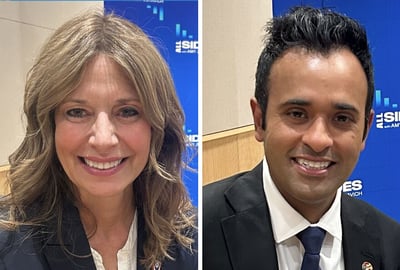
In a historic political contest that captured national attention, Amy Acton has won the election for governor in Ohio, defeating her high-profile opponent Vivek Ramaswamy, who had the direct backing and full endorsement of former president Donald Trump. The final vote tally marks a major milestone for the state, making her the very first woman to hold the top executive office in its entire history. As the results became clear late into election night, crowds of cheering supporters gathered in the state capital to celebrate a victory that few outside political commentators had predicted at the start of the race.
The story of this election is about two sharply different paths and two very different visions for the state. Amy Acton first became known to millions of everyday households as a calm, caring public health doctor who stepped in front of television cameras every single afternoon when the global health emergency struck a few years ago. Standing beside state leaders back then, she used simple charts, hand gestures, and honest words to tell families how to keep their elderly parents and young children safe. Her steady voice, quiet confidence, and medical training made her a household name across living rooms, earning her deep personal trust that stayed in the minds of regular citizens long after she stepped down from her state health role.
On the other side of the contest stood Vivek Ramaswamy, a young, energetic biotech entrepreneur and author who burst onto the national political stage with rapid-fire speeches, massive social media followings, and complete loyalty to Donald Trump. He ran a campaign focused on breaking up government systems, cutting state jobs, reducing business taxes, and carrying forward a strong conservative cultural message. With the enthusiastic personal backing of Donald Trump, he drew massive crowds at campaign rallies and raised tens of millions of dollars from national donors, making him the clear favorite of the party establishment from the opening day of the race.
The political battle took place in a state that had moved steadily to the conservative side over the last decade. For years, conservative candidates had won state races with comfortable margins, leading many national strategists to consider the region almost impossible for a moderate or progressive candidate to flip. However, the contest proved that local voters do not always follow party lines when they believe a candidate truly understands their daily struggles. Working families were tired of loud political fighting and wanted leadership that focused on kitchen-table matters instead of national ideological wars.
The winning campaign focused entirely on issues that touch ordinary lives every single day. Traveling in a campaign bus across small manufacturing towns, farming villages, and busy suburban streets, the doctor turned candidate spoke directly to factory workers, schoolteachers, nurses, and small shop owners. She talked about the rising cost of everyday grocery items, high electricity bills, unpayable prescription drug costs, and the lack of good healthcare clinics in rural counties. Instead of attacking her rival with personal insults, she listened patiently to the worries of families who felt left behind by big corporate decisions, promising to use her background in public health and community service to rebuild local services.
Her opponent, by contrast, focused heavily on national political controversies and cultural grievances. While his sharp rhetoric excited hardcore conservative loyalists, it created growing unease among moderate suburban voters, particularly educated women and independent working-class families. Many voters felt that his constant talk about national political battles had little to do with repairing local roads, upgrading neighborhood public schools, or keeping drinking water clean from factory waste. When independent voters weighed a wealthy businessman talking about national politics against a trusted neighborhood doctor talking about basic family health, large numbers chose the doctor.
The election turnout revealed a powerful coalition that reshaped the state voting map. Suburban neighborhoods surrounding major cities such as Columbus, Cleveland, and Cincinnati turned out in record numbers, delivering overwhelming vote margins for the history-making candidate. At the same time, she managed to cut down traditional conservative leads in industrial working-class counties along the river valleys, where union workers appreciated her focus on workplace safety, fair wages, and local community health clinics. Young voters and college students also showed up in huge numbers, inspired by the chance to elect the first woman to lead the state government.
The result is being viewed as a significant personal setback for Donald Trump, who had personally pushed his chosen candidate and held large rallies to help him secure victory. Political analysts point out that the defeat in an industrial heartland state shows clear limits to national political endorsements when local issues take center stage. When voters feel that an endorsed candidate is more focused on satisfying national leaders than solving local neighborhood problems, even the strongest political brand can fail to deliver the desired victory at the ballot box.
For women across the state and the country, the historic win carries enormous emotional meaning. For over two centuries, every single governor who walked through the doors of the statehouse was a man. Breaking that long ceiling proves to young girls and female community leaders that perseverance, compassion, and professional dedication can open doors to the highest levels of governance. During her victory speech, she addressed young people directly, reminding them that ordinary people with big hearts and a commitment to helping others can overcome even the most powerful political machines.
Supporters who packed the victory hall celebrated late into the night, waving signs, hugging family members, and chanting slogans of hope. Community health workers and hospital nurses who worked alongside her during tough times stood in tears, proud to see one of their own step into the governor office. In her warm and unifying victory address, she promised to be a leader for every single citizen, whether they voted for her or not, pledging to work with lawmakers from both parties to improve public schools, create steady local jobs, and make healthcare affordable for all families.
The newly elected leader now faces the heavy responsibility of taking office and managing a divided legislature. Passing budgets, reforming healthcare access, and supporting small businesses will require patient negotiation and practical compromises with political opponents. Yet, having beaten the odds and defeated a heavily funded rival, she enters the governor mansion with a clear mandate from the people. Her historic victory stands as a powerful reminder that honesty, empathy, and genuine care for the public good can still win the hearts of everyday citizens in modern democracy.