
Arab Voter Turnout Emerges As Decisive Factor In Israeli Election That Could Determine Benjamin Netanyahu Political Fate
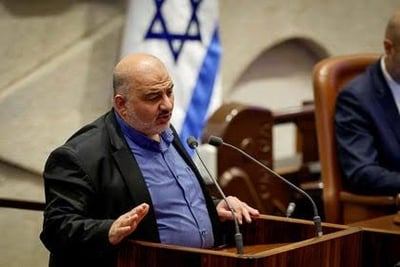
A decisive political battle is unfolding across Israel as the country prepares for a high stakes national election where the votes of its Arab minority could completely alter the political future of Prime Minister Benjamin Netanyahu. Arab citizens of Israel, who make up roughly twenty-one percent of the national population, hold significant collective voting power in the 120-seat parliament. While voter participation in Arab neighborhoods was historically low in previous ballots, political analysts, pollsters, and party strategists agree that this time, a surge in Arab voter turnout could make or break the governing coalition led by the country longest-serving leader.
The mood on the ground across Arab towns and mixed cities shows a noticeable shift from resignation to urgent political action. In the northern city of Nazareth, campaign workers have taken to the streets handing out election materials outside historical sites and busy market squares. Community elders and young university students are engaging in heated discussions in local coffee shops, debating whether casting a ballot will finally bring change to their neglected neighborhoods. For years, many Arab citizens felt alienated from national politics, believing that Israeli elections rarely brought tangible improvements to their daily lives. Today, however, many see this election as an existential moment that cannot be ignored.
The biggest driver pushing Arab families to the voting booths is the deep anger over everyday security and neglect within their towns. Over recent years, Arab neighborhoods have suffered from an alarming rise in organized gang crime, extortion, and gun violence that has claimed hundreds of innocent lives. Residents complain that local police stations do not take crime in Arab communities as seriously as in majority Jewish cities. Families are terrified to let their children play outside after dark, while small shop owners face extortion demands from armed gangs. For ordinary people, the election represents an urgent demand for safe streets, functioning public services, and equal protection under the law.
The political tensions have been heightened by the openly hostile rhetoric coming from hardline ministers inside Netanyahu governing alliance. Far-right leaders like National Security Minister Itamar Ben-Gvir and Finance Minister Bezalel Smotrich have repeatedly pushed policies that Arab citizens see as direct attacks on their civil rights and economic wellbeing. Government decisions to withhold municipal funding from Arab city councils, freeze school development funds, and promote discriminatory laws have created widespread resentment. For many Arab voters, casting a ballot is not merely an exercise in party loyalty, but a direct attempt to remove what they describe as the most extreme right-wing administration in the history of the country.
Independent polling data collected ahead of the vote indicates that Arab voter participation could rise dramatically compared to earlier election cycles. Research groups like the Stat-Net Research Institute have projected turnout among Arab citizens to climb toward 63 percent, a sharp jump from the roughly 53 to 56 percent recorded during previous elections. In the complex math of the Israeli electoral system, where parties must cross a strict threshold to enter parliament, high minority turnout can dramatically reduce the seat total of the right-wing bloc while increasing the strength of opposition alliances.
The political representation of the Arab community is broadly divided into two distinct strategies, both of which could play a major role in shaping the next government. On one side is the United Arab List, led by Mansour Abbas, which previously made history by joining a governing coalition to secure direct economic budgets, housing approvals, and infrastructure investments for Arab towns. Abbas continues to advocate for a pragmatic approach, signaling that his party is open to negotiating with potential prime ministers if it delivers concrete improvements for his community.
On the other side stands the Joint List, led by veteran politicians like Ahmad Tibi and Ayman Odeh, which prefers to exert leverage by forming an outside opposition block. Tibi publicly stated that his primary priority is to dismantle the governing coalition led by Netanyahu and his hardline allies. The Joint List indicated that while it might not formally take cabinet posts, it is prepared to support an alternate centrist government from the outside to block the return of the right-wing bloc and demand an official commission of inquiry into past government failures.
For Benjamin Netanyahu and his party strategists, the potential surge in Arab voter turnout presents a serious campaign hurdle. In past elections, right-wing leaders often used polarising campaign messaging to fire up their conservative religious base, warning supporters that high Arab turnout posed a threat to the state. However, analysts note that such rhetoric can backfire by further motivating minority voters to turn out in droves. With Netanyahu facing ongoing court cases and tight poll margins against former defense officials and centrist contenders, losing even two or three seats could completely destroy his path to a working 61-seat majority.
The human perspective of this political contest reaches far beyond party seats and coalition math. Arab citizens of Israel share a unique and complicated identity, being Palestinian by heritage and culture, but Israeli by legal citizenship. The ongoing regional conflicts, devastating wars in Gaza and Lebanon, and family ties across borders have placed enormous emotional stress on this community. Many citizens feel that expressing their views through peaceful voting is their only lawful way to stand up for their rights and push for a peaceful, equal society for both Arabs and Jews.
Business owners and local municipal leaders in Arab districts are also watching the electoral campaign with great urgency. Mayors of Arab towns have repeatedly struggled to keep streetlights running, build new classrooms, and clean public roads because state funds were frozen by right-wing ministries. They argue that equal economic investment in Arab communities is not charity, but a necessary step to build a strong, stable, and prosperous nation for everyone. They hope that a newly formed government will treat all citizens fairly, regardless of their religious or ethnic background.
As election day draws near, the countdown in towns from the Galilee to the Negev desert has turned into a massive mobilization effort. Community organizers, volunteers, and religious figures are driving through neighborhoods with loudspeakers, urging registered voters not to stay home on voting day. The message being delivered is clear: staying home only strengthens the politicians who ignore their problems, while turning out in large numbers gives the minority community the collective power to reshape national leadership.
The upcoming vote has placed Israel Arab citizens in an unprecedented position as potential kingmakers of national politics. Whether they choose to participate in large numbers will decide not just which parties cross the parliamentary threshold, but whether Benjamin Netanyahu political era continues or comes to a sudden halt. As the ballots are prepared, the ultimate direction of the country leadership may very well be decided by the citizens walking into polling booths in the quiet neighborhoods of Nazareth, Umm al-Fahm, and Rahat.