
JD Vance 2028 Presidential Race Decision Uncertain As Vice President Weighs Family Life And Four Young Children
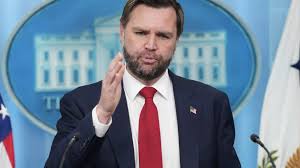
United States Vice President JD Vance has openly admitted that there is a real possibility he might sit out the upcoming 2028 contest for the presidency. His unexpected comments have created immediate waves across the American political landscape, catching lawmakers, political strategists, and everyday voters off guard. For months, political analysts had viewed the sitting vice president as the natural frontrunner to step forward and lead his party once the current presidential term concludes. Instead, Vance made it clear that personal life, home responsibilities, and conversations around his kitchen table will hold just as much weight as personal ambition when deciding whether to seek the highest office in the country.
The candid revelation took place during an open town hall hosted by CBS News in the battleground state of Michigan on Saturday, October 17, 2026. When a moderator directly asked whether he might decide against launching a presidential campaign in 2028, Vance did not dodge the question or offer a rehearsed campaign answer. He openly confirmed that there is certainly a chance he will choose to walk away from the contest. He explained that life inside the national capital can be exhausting for a young household, reminding listeners that he and his wife are currently raising four small children who need time, parental care, and daily attention that standard political campaigns make nearly impossible.
At the center of his reflections is his marriage to Second Lady Usha Vance, whom he met while they were both law students at Yale University. Vance shared that while his wife has a deep and genuine passion for public service and community improvement, she has never enjoyed the noisy, hostile environment of daily partisan politics. Over recent months, Usha Vance has built her own respected profile by supporting literacy programs, educational initiatives, and cultural arts across the nation. However, she has deliberately stayed clear of campaign machinery and party strategizing, often describing herself to reporters as an honest sounding board for her husband rather than a political adviser or staff worker. Her hesitation about the constant hostility of national politics appears to be playing a significant part in how they view their family future together.
With typical honesty, the vice president also offered an amusing personal explanation for why he refuses to jump into early campaign commitments. He told the audience in Michigan that when it comes to massive life choices, he has always been someone who puts things off until the last possible minute. He joked that his wife would be the very first person to tell the world that he hates spending mental energy on distant decisions. Because running for the presidency requires years of traveling, raising hundreds of millions of dollars, and dealing with intense personal scrutiny, Vance stated that he does not want to rush into an early promise before he has lived through his present responsibilities and evaluated where his life stands.
The timing of his comments has sparked widespread discussion because it comes right as the country prepares for the high stakes November midterm elections. Vance made it clear that he will not spend any time actively debating a 2028 campaign until after voters cast their ballots in the midterms. He stressed that his primary goal right now is simply to perform his current vice presidential duties as well as possible, help his administration deliver results for working families, and campaign for fellow party members who are fighting for tough legislative seats across the country. In his view, planning for personal promotions while the country is facing major economic challenges and legislative votes would be a disservice to the voters who put him in office.
What makes his hesitation even more fascinating to political observers is the fact that Vance currently holds a strong early lead in primary polls. Early surveys tracking potential candidates for the 2028 Republican nomination show the vice president holding a comfortable double digit advantage over other potential contenders. His closest competition in early polling numbers includes high profile figures like Donald Trump Jr, who follows behind with eleven percent support, alongside popular state governors and federal lawmakers. In modern American history, politicians who find themselves at the top of national popularity charts rarely hesitate to declare their intentions. Turning down or even questioning such a clear political opening is an unusual sight in high stakes Washington politics.
The daily life of a modern vice president with a growing young family brings unique personal sacrifices that few outside government truly understand. Raising four young children under the watchful eye of secret service agents, flashing media cameras, and constant security motorcades can be overwhelming for young parents. Ordinary family routines like taking children to soccer games, attending school plays, or having a private family dinner become major logistical operations involving security clearances and public barriers. Friends close to the Vance family note that both parents are very protective of their children childhood and worry that launching into another grueling multi year national campaign would rob their kids of a normal upbringing.
For the broader conservative movement, the vice president words create an unexpected layer of uncertainty about who will carry their banner in future years. Vance has been seen as the intellectual bridge between traditional conservative values and the newer working class movement that transformed the party over the last decade. His famous memoir, his background coming from a struggling industrial town in Ohio, and his focus on domestic manufacturing, secure borders, and family support policies made him a natural champion for blue collar voters. If he chooses to step aside, it would trigger a wide open contest among dozens of ambitious governors, senators, and business executives eager to seize the leadership mantle.
The contrast between Vance measured tone and the aggressive style of typical career politicians has earned mixed reactions from the public. Many independent voters, working mothers, and fathers across the country expressed appreciation for his honesty, seeing it as refreshing that a powerful official would place the mental well being of his wife and the childhood of his kids above personal power. On the other hand, some anxious party loyalists worry that showing open doubt so early might project weakness or invite political rivals to begin organizing fundraising teams behind his back, potentially weakening his standing within his own administration.
Yet, those who have watched Vance career point out that he has never followed standard political playbooks. From his time as a young marine to his success as an author, venture capitalist, senator, and now vice president, he has repeatedly taken unexpected turns in his professional life. Political historians note that stepping back from an early campaign does not necessarily mean ending a political career forever. In the past, prominent leaders have taken temporary breaks to focus on young families or private ventures, only to return to public life with fresh energy and greater public respect once their children were older.
The discussion also highlights the heavy psychological burden placed on modern political spouses. While voters focus on candidates on debate stages, the families of candidates often face the hardest part of the public spotlight. Spouses are subjected to endless social media attacks, relentless travel schedules, and intrusive questions about their private beliefs. By openly acknowledging that his wife never loved the circus of partisan politics, Vance brought rare transparency to the human cost of national leadership, reminding citizens that politicians are also ordinary human beings with spouses whose personal comfort and happiness cannot simply be ignored.
As the midterm elections approach and the political calendar rolls on toward 2028, political analysts will undoubtedly continue to dissect every word and speech delivered by the vice president. For now, Vance appears entirely content to leave the door open, focus on his daily governing tasks, and let time provide the answers. Whether he eventually decides to mount a run for the White House or chooses to return to private life with his wife and four children, his choice will be remembered as a rare moment when family peace was placed directly on the scale against the highest political prize in the world.