
World Food Programme Cuts Food Aid To 500000 Palestinians In Gaza Due To Severe Global Funding Shortages
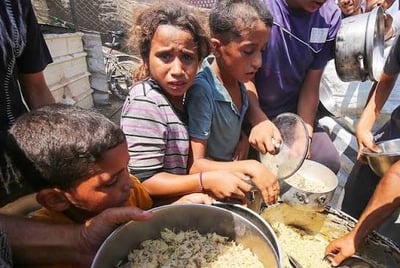
The United Nations World Food Programme has taken the painful decision to cut off monthly food support to half a million Palestinians living across the Gaza Strip because the agency has run out of international funding. The emergency reduction means the total number of people receiving regular food assistance from the global food agency will drop from 1.6 million down to 1.1 million, marking an immediate cut of nearly one third of its entire relief operation. The announcement has sent shockwaves through overcrowded displacement camps where families have almost no other way to put bread on the table, creating intense fear that starvation will spread rapidly through neighborhoods that have already suffered immense destruction.
The daily reality for ordinary families across the coastal territory has already reached breaking point. More than two million people have been forced out of their original homes, living packed together under thin plastic sheets, ripped cloth tents, and inside the cold ruins of bombed concrete apartments. Finding clean water to drink requires walking long distances with heavy yellow plastic jugs, while cooking fuel is practically nonexistent, forcing mothers to burn scraps of paper, cardboard, and dried trash to boil water for their children. For hundreds of thousands of parents who have no jobs, no savings, and no income left, the monthly food box containing flour, lentils, cooking oil, and canned beans from the United Nations was the only thing standing between their children and total hunger.
Humanitarian officials explained that the decision to cut food rations was not caused by any drop in human suffering or an inability to deliver food supplies inside the territory. The acting Executive Director of the World Food Programme, Carl Skau, recently traveled inside Gaza to inspect distribution centers and talk directly with affected families. Speaking about the situation, Skau stated that life on the ground remains brutal, noting that there is no proper shelter, no working basic services, and no real safety or security for the population. He explained that while relief teams have food ready to move, their bank accounts are simply empty because traditional wealthy donor nations have failed to supply the necessary funds.
Financial reports released by the United Nations indicate that the agency urgently requires 450 million dollars over the next six months just to keep its core emergency feeding operations alive across Gaza and the occupied West Bank. Skau pointed out that contributions from historic donor governments, including the United States and several European countries, have dropped significantly over the past year. International organizations are facing what experts describe as widespread donor fatigue, where governments across the globe reduce their foreign aid budgets or redirect their money toward other pressing international emergencies and military conflicts. Because of this severe funding shortage, even the families who remain on the assistance list will receive smaller daily rations and fewer hot meals than before.
The human heartbreak caused by the announcement was felt immediately among displaced people living in makeshift camps. In the Nuseirat refugee camp in central Gaza, a Palestinian woman named Sabrine Kuhail stood outside her family worn cloth tent and expressed deep sorrow and exhaustion. She shared that after enduring three continuous years of violent bombardments, ruined neighborhoods, military siege, and constant bloodshed, families feel completely abandoned by the world. She questioned why international organizations would make life even harder for ordinary citizens who are already weak and exhausted, pleading with global leaders to understand that regular people cannot survive another season of cuts and neglect.
Local authorities in the territory have reacted with grave alarm to the news of the aid cuts. The government media office in Gaza released an urgent statement describing the decision of the World Food Programme as catastrophic, warning that stopping food shipments to half a million people will speed up the spread of famine across the entire enclave. Community leaders pointed out that commercial markets in the area are almost completely bare, and the few food items sold by private traders on street corners carry prices so high that regular families cannot afford them. Local health workers warned that without immediate cash support to buy food, public health clinics will soon see a massive surge in children suffering from severe acute malnutrition.
The crisis is made even more difficult by continuing restrictions on the flow of goods across border crossings. United Nations officials noted that Israeli security forces still maintain tight control over entry gates and commercial routes, strictly limiting the kinds of trucks, building materials, and electrical machinery allowed into the territory. Because heavy equipment and reconstruction supplies cannot enter freely, aid agencies have found it nearly impossible to rebuild broken bakeries, repair destroyed water pumps, or fix sewage pipes. These administrative obstacles leave any temporary improvements in local food supplies extremely fragile and vulnerable to sudden collapse at any time.
The timing of the aid reduction could not be worse, as families prepare to face another harsh winter season with almost no protection from the elements. Official estimates from child welfare agency UNICEF indicate that roughly 800,000 children across Gaza are currently displaced, living inside flimsy tents that flood whenever heavy rain falls from the sky. As cold winds sweep across coastal beaches and open desert fields, babies and young children who lack warm jackets, thick blankets, and nourishing warm food face dangerous risks of pneumonia, hypothermia, and winter sickness. Parents who already struggle to keep their children warm are now terrified that they will not even have enough bread to keep their stomachs full through cold nights.
Humanitarian surveys show that more than 1.4 million people in the territory are currently experiencing crisis levels of food insecurity or even worse conditions. Many parents openly admit that they skip meals for days so that their younger children can eat whatever small piece of dry bread remains. Community soup kitchens and volunteer food distribution points that used to provide thousands of hot bowls of lentil soup each afternoon have already begun turning people away because their storage sacks are empty. Without immediate cash injections to buy grain, beans, and cooking oil, dozens of neighborhood feeding stations will be forced to shut their doors permanently before the end of the year.
Humanitarian leaders are making a passionate public plea to the international community, urging wealthy governments and private charities not to turn their backs on innocent civilians. Carl Skau emphasized that now is certainly not the time for the world to look away, warning that abandoning displaced families now will wipe out every small bit of humanitarian progress achieved through months of hard work. Aid officials stress that while political discussions and ceasefire negotiations between warring parties continue to drag on without a lasting peace deal, innocent civilians and helpless babies must not be used as pawns or left to starve while diplomats talk in distant conference rooms.
For the hundreds of thousands of people standing in long lines outside United Nations distribution centers, the news brings a heavy sense of dread and helplessness. These are ordinary teachers, shop workers, taxi drivers, and homemakers who once lived normal lives with warm kitchens and dinner tables, but now find themselves dependent on international charity just to stay alive. As international agencies reduce their assistance packages, the responsibility falls squarely on the conscience of the global community to step forward with emergency funding. Preventing widespread starvation in Gaza is not an impossible technical problem, but a question of basic human empathy and global political will.