
Bail Is Rule Jail Exception Even Under UAPA Supreme Court Historic Judgment Defends Personal Liberty
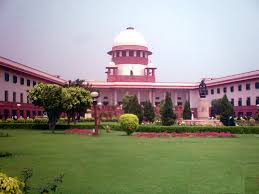
The Supreme Court of India has delivered a landmark judgment that significantly reshapes the landscape of civil liberties, ruling that the fundamental principle of bail is the rule and jail is the exception holds true even under the stringent Unlawful Activities Prevention Act. A division bench comprising Justice Ujjal Bhuyan and Justice BV Nagarathna made this definitive pronouncement while granting bail to a resident of Jammu and Kashmir who had been incarcerated since June 2020 without trial in a narco terrorism case. The apex court forcefully articulated that the statutory restrictions on bail embedded within Section 43D(5) of the special anti terror law cannot override the primary constitutional guarantees of life and personal liberty. The bench noted that long pre trial custody without any clear end to the legal proceedings creates a situation that directly infringes upon the basic human rights of an individual, necessitating swift judicial intervention to prevent indefinite detention without established guilt.
The judicial clarity provided in this ruling acts as a major constitutional reset by challenging the increasing tendency of lower tribunals and special prosecution units to treat long incarceration as a standard procedure. Writing the judgment, the bench emphasized that the presumption of innocence is the absolute cornerstone of any civilized society governed by the rule of law, and it cannot be discarded simply due to the gravity of the accusations. The court observed that the phrase regarding bail being the rule is not just an empty statutory slogan but a constitutional mandate flowing directly from Articles 21 and 22 of the Constitution. By establishing that special statutes cannot completely invert the relationship between liberty and detention, the top court has restricted the absolute power often exercised by investigative agencies to keep individuals jailed for years under the guise of national security protocols while trials remain stalled at preliminary stages.
A highly critical aspect of this verdict is the explicit disapproval expressed by the bench toward recent conflicting decisions delivered by benches of lower or equal strength. The judges noted with concern that recent rulings, such as the one denying relief to activists in the Delhi riots conspiracy case, had effectively hollowed out the historic protection established in the binding landmark precedent of the KA Najeeb case. The court pointed out that smaller benches had strayed from established judicial discipline by creating narrow, hyper technical hurdles that made securing freedom nearly impossible for those under special laws. To reinforce the necessity of this shift, the bench brought forward striking statistical data from the National Crime Records Bureau, highlighting that the actual conviction rates under the special anti terror law across the country languish between a minimal one point five percent and four percent, dropping even below one percent in regions like Jammu and Kashmir. This massive statistical gap between aggressive arrests and final convictions exposes a systemic issue where prolonged detention itself inadvertently becomes the punishment.
Ultimately, this significant judicial intervention underscores that the true strength of a democracy lies in its capability to balance national security needs with the protection of individual rights. The top court has drawn a clear line, warning that the seriousness of a criminal accusation should ideally demand a speedier trial rather than functioning as a justification for endless imprisonment. This ruling will undoubtedly force a major re-evaluation of pending cases across high courts and trial chambers, compelling prosecutors to substantiate their claims with timely trials rather than relying on statutory embargoes to block fundamental freedoms. True systemic fairness is only achieved when legal mechanisms prevent the abuse of special powers, ensuring that the investigative machinery remains accountable to constitutional standards and that public spaces are governed by justice rather than arbitrary procedural delays.