
Bangladesh Considers Joining Saudi Arabia Turkey Pakistan Defence Alliance as Dhaka Shifts Strategic Focus to Mecca Security Pact
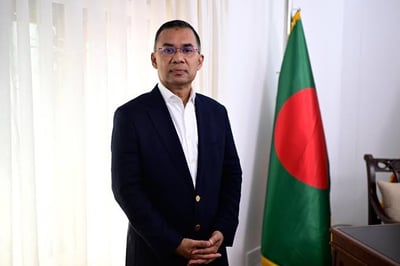
Bangladesh has signaled a major foreign policy shift by confirming that it is positively reviewing an official invitation to enter a collective defense alliance with Saudi Arabia, Turkey, and Pakistan. Government leaders in Dhaka have acknowledged that participating in a mutual security framework with leading Islamic nations is an attractive option as the country seeks to safeguard its sovereign interests, modernize its armed forces, and secure vital economic lifelines. The move marks one of the most consequential geopolitical reassessments for the South Asian nation in decades, potentially moving Dhaka away from its traditional stance of strict non-alignment toward formal military partnerships.
The diplomatic outreach gained formal recognition after senior officials in the newly formed government confirmed that Saudi Arabia had extended an invitation to Prime Minister Tarique Rahman to participate in the security framework. Bangladesh State Minister for Foreign Affairs Humayun Kabir stated that Dhaka is reviewing the proposal with an open and constructive approach, explaining that it is natural for Bangladesh to consider entering multilateral security arrangements with close partners across the Muslim world. Junior foreign affairs minister Shama Obaed Islam reinforced this position, explaining that any eventual participation will be determined strictly by how effectively the alliance protects the national and economic interests of the Bangladeshi people.
The security framework at the center of discussions is the Mecca Joint Defence Agreement, which was formally signed on 7 August 2026 at Al-Safa Palace in the holy city of Mecca. The foundational document was executed by Saudi Crown Prince Mohammed bin Salman, Turkish President Recep Tayyip Erdogan, and Pakistani Prime Minister Shehbaz Sharif. Built around a mutual protection clause comparable to the collective defense principle of Western alliances, the treaty establishes that an armed attack against any single member state will be treated as an act of aggression against all signatories. The pact also establishes joint command councils, intelligence sharing protocols, and coordinated military production programs.
For policymakers in Dhaka, economic calculations and remittance security play an enormous role in evaluating the alliance. Saudi Arabia stands as Bangladesh largest single source of overseas financial remittances, contributing over 5.28 billion dollars in foreign exchange inflows during the recent financial year alone. Millions of Bangladeshi expatriates live and work across the Gulf region, making cordial relations with Riyadh essential for domestic financial stability. By entering a formal partnership with the kingdom, Dhaka hopes to secure long-term protections for its overseas labor force while attracting substantial sovereign wealth investments into domestic energy and industrial sectors.
Energy security presents another urgent incentive driving Dhaka toward deeper cooperation with Middle Eastern partners. Bangladesh remains heavily dependent on imported liquefied natural gas and crude oil, with primary maritime supply routes passing through the Red Sea and adjacent shipping lanes. Prolonged instability and maritime disruptions across West Asia have repeatedly threatened domestic fuel reserves and industrial manufacturing. Aligning with an alliance that includes major naval and regional powers is seen by defense planners in Dhaka as a practical strategy to help protect commercial sea lanes that supply domestic energy grids and carry garment exports to global markets.
Military modernization also serves as a central pillar of the proposal. The three founding members of the pact offer distinct military strengths that could help upgrade Bangladesh defense capabilities. Turkey has emerged as a global leader in military drone technology, naval corvettes, and advanced armored vehicles, while Pakistan maintains advanced aerospace production facilities and tactical air platforms like the JF-17 fighter jet. Participating in joint military drills, personnel training modules, and defense manufacturing agreements would allow Bangladeshi armed forces to diversify their defense procurement away from single suppliers and gain access to advanced tactical technology.
However, the prospect of joining a formal defense alliance introduces delicate geopolitical challenges, particularly regarding relations with neighboring India. Ties between Dhaka and New Delhi have experienced diplomatic friction over the extradition of former prime minister Sheikh Hasina, border security issues, and cross-border water sharing disputes. Because the proposed defense pact includes Pakistan, security analysts in New Delhi have expressed deep concern over the creation of a collective military footprint along India eastern and western borders. Indian foreign policy monitors have confirmed they are closely tracking diplomatic developments surrounding the Mecca agreement.
Entering a binding mutual defense pact also marks a departure from Bangladesh historical foreign policy principle of friendship to all and malice toward none. For decades, Dhaka avoided entering formal military blocs, preferring neutral diplomatic balance that allowed constructive relationships with competing global powers, including the United States, China, Russia, and Japan. Strategic experts at Dhaka University have noted that while the government new Bangladesh First doctrine seeks greater independence and national assertiveness, collective defense commitments could complicate diplomatic neutrality if conflict erupts in regions far beyond South Asia.
Domestic political considerations will also influence the ultimate decision. While the vast majority of the population shares close cultural and religious ties with the Middle East, sections of civil society remain mindful of the complicated history stemming from the 1971 war of independence with Pakistan. Government officials have emphasized that diplomatic engagement with Islamabad will remain focused on practical trade, connectivity, and defense collaboration rather than ideological shifts, assuring citizens that sovereign independence will remain paramount.
The coming months will determine whether Bangladesh formally signs the mutual defense treaty or opts for an associate partnership focused primarily on economic and defense-industrial cooperation. Prime Minister Tarique Rahman is scheduled to visit Riyadh later in the year at the personal invitation of Saudi Crown Prince Mohammed bin Salman, where bilateral security cooperation and regional trade frameworks will top the agenda. As discussions proceed, Dhaka continues to weigh the strategic benefits of collective deterrence and energy security against the challenge of preserving its diplomatic autonomy in an increasingly divided world.