
US Army Leadership Crisis Deepens as Defence Secretary Pete Hegseth Purges Top Generals Leaving Command Structure Depleted
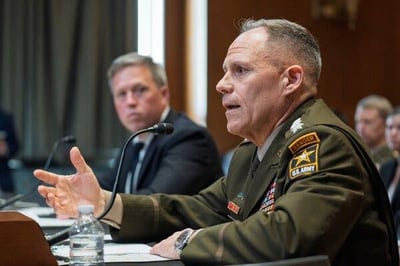
The United States Army is grappling with an unprecedented leadership crisis at the highest levels of its command structure following a sweeping purge of top military commanders orchestrated by Defence Secretary Pete Hegseth. The rapid removal of seasoned four-star generals and senior service leaders has hollowed out the upper ranks of the ground forces, leaving vital decision-making positions vacant or operating under temporary acting commanders. The sudden erosion of institutional experience comes at a precarious juncture for American defense planners who are simultaneously managing active overseas deployments, drone threats in the Middle East, and large-scale military logistics operations in Eastern Europe.
The command vacuum became acute after Hegseth removed the Army Chief of Staff, General Randy George, abruptly in April without providing a formal public explanation. George, a highly decorated infantry veteran of the Gulf War, Iraq, and Afghanistan, was serving a standard four-year term that was scheduled to run through 2027. His dismissal was accompanied by the forced ouster of several top officers considered natural successors to the position, including General David Hodne, who was removed after just 8 months leading the Army Transformation and Training Command, and Major General William Green Jr, the chief of chaplains.
The administrative upheaval has cut the number of active-duty four-star Army generals in half, dropping from 10 when Hegseth assumed office to only 5 today, the lowest level recorded in decades. Key global commands responsible for rapid troop deployment, ground equipment modernization, and specialized air-defense systems have been left without confirmed permanent leaders or have been handed over to officers from other service branches. The downgrade of critical regional commands in Europe from four-star to three-star billets has further unsettled career officers, fueling concerns over forced early retirements and diminished strategic influence.
Hegseth preferred candidate to lead the service, General Christopher LaNeve, has been placed in the demanding dual role of acting Chief of Staff and Vice Chief of Staff. However, his formal nomination has stalled in the United States Senate, where lawmakers from both major political parties have placed legislative holds on his confirmation. Lawmakers have voiced deep frustration with the Pentagon over a lack of transparency regarding sudden leadership terminations, strategic planning disputes, and dwindling stockpiles of crucial Patriot interceptor missiles and long-range artillery systems.
The internal discord within the Department of Defense has extended to civilian administrative leadership as well. Relations between Hegseth and Army Secretary Daniel Driscoll have sharply deteriorated, with Pentagon officials revealing that the two leaders are barely on speaking terms. Driscoll, who worked closely with ousted military brass to restructure battlefield tactics around autonomous drone warfare, is widely expected to step down by the end of the year. The collapse of cooperation between the top civilian secretary and the defense secretary has created severe friction in executing long-term defense acquisitions and budget allocations.
The leadership turmoil is unfolding as American ground forces face their most complex operational demands in decades. Army air-defense units operating across the Middle East are under continuous pressure to track and intercept advanced aerial drones and ballistic missiles targeting military installations and international shipping lanes. At the same time, specialized logistics units continue to manage multi-billion dollar arms transfers, training programs, and intelligence-sharing operations for Ukrainian forces countering Russian operations in Eastern Europe.
National security analysts and former military commanders have expressed alarm that replacing experienced combat-tested leaders with acting officials weakens operational readiness. They warn that the removal of top officers based on political litmus tests or personal disputes threatens the military traditional nonpartisan ethos, which requires generals to provide candid, unfiltered assessments to executive leadership without fear of retribution. Former defense secretaries across past administrations have issued warnings that partisan purges discourage prospective recruits and undermine morale among active-duty service members.
The Pentagon has continued to publicly defend its organizational direction, maintaining that modernizing force structures and restoring basic warrior readiness require bold managerial adjustments. Army administrative spokespersons have insisted that strategic missions remain fully functional and that active commanders are executing operations without disruption. Despite these assurances, defense committees in Congress are intensifying their oversight, demanding formal hearings to examine the cascading vacancies and assess whether the ongoing turmoil inside the Pentagon is compromising national security at a critical geopolitical moment.