
Bengal BJP Govt To Play Active Role In Land Purchase For Investors With Lucrative Compensation And Dedicated Sharecropper Relief Package
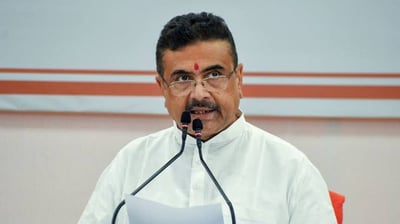
The Bharatiya Janata Party led government in West Bengal has announced that the state administration will play a direct and active role in facilitating land purchases for prospective industrial investors. Unveiling a major shift in the state industrial strategy, senior government officials confirmed that the administration headed by Chief Minister Suvendu Adhikari is overhauling earlier land practices to attract long term capital, rebuild investor confidence, and accelerate economic growth. Under the refreshed framework, the state will actively step into the land procurement process rather than leaving businesses to negotiate private purchases on their own or resorting to coercive state takeovers.
The announcement forms the core of the state new Investment Promotion Policy, which seeks to turn West Bengal into a preferred destination for heavy manufacturing, infrastructure development, and technology projects. Outlining the policy shift, senior officials explained that the government has closely examined industrial models across industrialized states such as Gujarat, Maharashtra, and Uttar Pradesh to develop a balanced approach. The administration explicitly distanced itself from the historic land policies of previous regimes, rejecting both the Left Front policy of forcible land acquisition and the Trinamool Congress policy that left private industries to acquire land independently without government facilitation.
To ensure that industrial expansion does not spark agrarian distress, the state government is structuring a lucrative direct purchase model for landlosers. Under this mechanism, farmers and rural landholders who voluntarily sell land for commercial and industrial ventures will receive financial packages significantly above prevailing circle rates, alongside direct assistance to protect their long-term economic stability. State officials emphasized that no farmland will be acquired through administrative force, ensuring that land transactions take place through mutual agreement, transparent negotiations, and guaranteed market-linked valuations.
In another major policy step, the government will introduce a dedicated rehabilitation policy specifically tailored for bargadars, the traditional sharecroppers who cultivate land without holding ownership titles. For decades, land acquisitions across Bengal frequently left registered and unregistered sharecropping families economically vulnerable during corporate transactions. By instituting a separate compensation and livelihood support program for sharecroppers, the administration plans to provide direct financial grants, alternate employment training, and priority access to rural welfare programs, ensuring that farm workers are not left behind when land use changes.
The policy also outlines the creation of dedicated state-backed land banks across industrial corridors, allowing global and domestic companies to set up factories without facing delays or legal disputes. The government has already begun identifying unused industrial land, recovering plots from long-closed industrial units in belts such as Barrackpore, and facilitating land for major corporate groups. Officials noted that fresh investment proposals worth nearly one lakh crore rupees are in the pipeline, spanning sectors such as steel manufacturing, dairy processing, textiles, and heavy engineering.
The proactive approach to land acquisition marks an important political and economic turning point for West Bengal, where land disputes have historically shaped the political destiny of governments. By balancing business needs with comprehensive safeguards for farmers and sharecroppers, the ruling administration aims to present a workable template for peaceful industrialization. For rural communities and potential investors alike, the success of the new framework will depend on transparent administrative execution, fair compensation delivery, and the creation of tangible local employment across the state.