
Bengal BJP Govt Urges Migrant Workers To Return Home, Guarantees Rs 34,500 Annual Income Under 125-Day Rural Job Scheme
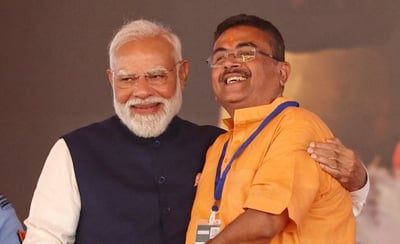
The Bharatiya Janata Party led government in West Bengal has launched an ambitious initiative to bring back migrant workers who left the state in search of employment, offering guaranteed local jobs and an assured annual income of Rs 34,500 per job card holder. Addressing a state panchayat and rural development review meeting in Kolkata, Chief Minister Suvendu Adhikari urged workers to return home and reunite with their families, highlighting the rollout of the VB-G RAM G employment guarantee scheme providing 125 days of assured rural work. The state administration is actively working to meet the central government target of generating 22 crore person-days, backed by a collaborative funding allocation of Rs 12,000 crore made jointly by the Centre and the state.
Reviewing progress on the ground, the Chief Minister confirmed that West Bengal has already registered 65.62 lakh person-days of employment under the renewed drive, with daily rural job deployment surpassing 7.09 lakh workers across village bodies. The state government has set a target to scale up daily deployment to 10 lakh person-days by December, with a long-term goal of reaching 17 lakh person-days per day. Highlighting administrative reforms carried out in coordination with New Delhi, Adhikari noted that the central government had previously cancelled 31 lakh fraudulent job cards detected during the MGNREGA regime. Following central clearances, Aadhaar seeding discrepancies have been rectified, and approximately 10 lakh authentic job cards have been distributed to genuine rural beneficiaries.
The Chief Minister mounted a sharp attack on the previous Trinamool Congress administration, stating that pervasive corruption and misdirection of welfare funds had cost the state exchequer roughly Rs 80,000 crore over four years, which had earlier led the Centre to freeze rural scheme disbursements. Adhikari stressed that under the restructured governance framework, wages are being credited directly to beneficiary bank accounts, eliminating middlemen and bringing complete transparency. To provide diverse employment opportunities, the state has published a detailed booklet outlining 375 designated rural development categories—including canal rejuvenation, farm pond excavation, rural road paving, and social forestry—across 3,339 gram panchayats.
To address long-standing administrative vacancies in grassroots civic bodies, the state cabinet has approved the recruitment of 7,190 permanent personnel through the West Bengal Public Service Commission. The administration plans to revise recruitment rules following the upcoming assembly session, aiming to complete deployments across village councils by April 2027. In the interim, 1,000 contractual workers will be engaged for a one-year tenure to manage day-to-day operations. Furthermore, to centralize rural governance, the government has finalized the construction of a dedicated Panchayat Bhavan on a five-acre plot in New Town, Kolkata, situated close to the proposed complexes of the state Assembly and the Calcutta High Court.
Complementing the rural wage initiative, the administration detailed an extensive rural housing drive under the Pradhan Mantri Awas Yojana and Banglar Awas Yojana. The government plans to construct homes for 47 lakh eligible beneficiaries who had been excluded under previous regimes, targeting completion over the next two years. In addition, rural beneficiaries building their own houses will be permitted to claim up to 95 days of paid labor under rural employment schemes, providing up to Rs 27,000 in supplementary wage support during the construction period.
The proactive campaign to reverse migration marks a central pillar of the ruling administration economic and governance agenda in West Bengal. Millions of laborers from districts such as Murshidabad, Malda, South 24 Parganas, and Purulia have traditionally traveled to major metropolises like Delhi, Mumbai, and Bengaluru to work in construction and manufacturing due to the lack of steady local wages. By pairing statutory wage guarantees with root-and-branch cleanup of employment rolls, the Bengal BJP govt aims to restore rural livelihoods, curb economic distress, and build institutional trust across the state hinterland.