
Hyderabad Water Tanker Supplies Resume As Operators Call Off Strike Following Talks With HYDRAA Over Groundwater Extraction Limits Outside ORR
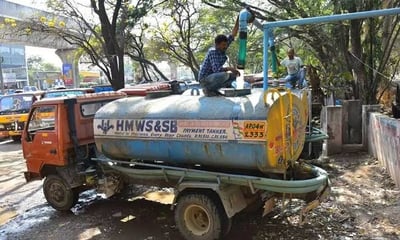
Commercial water tanker deliveries have resumed across Greater Hyderabad after the Hyderabad Water Tankers Association officially called off its two-day strike following decisive talks with the Hyderabad Disaster Response and Asset Protection Agency, known as HYDRAA. The breakthrough brings immediate relief to thousands of residential colonies, paying guest hostels, hospitals, restaurants, and IT hubs that had faced severe water shortages after tanker operators abruptly halted supply operations. Under the consensus brokered by HYDRAA Commissioner A V Ranganath, tanker operators agreed to stop drawing water from deep borewells located within core city municipal limits and committed to sourcing groundwater exclusively from authorized locations situated outside the Outer Ring Road.
The standoff erupted after regulatory authorities initiated a crackdown against unauthorized commercial borewells operating in densely populated residential areas. In high-demand IT corridors and commercial pockets such as Madhapur, Gachibowli, Kukatpally, and Ameerpet, tanker owners had been sinking commercial borewells to extreme depths ranging from 1,000 to 1,500 feet, deploying high-capacity industrial motors to pump round the clock. Because domestic household borewells typically operate at modest depths between 100 and 300 feet, the aggressive round-the-clock extraction by commercial operators led to a sharp drop in local water tables, causing private household wells to dry up completely.
The drying up of domestic groundwater triggered massive public anger and demonstrations by resident welfare associations in neighborhoods like Tellapur, Suraram, and Jeedimetla, where citizens demanded government intervention against the commercial exploitation of their shared water resources. When enforcement squads moved to inspect and seal unauthorized points, the tanker association responded by launching a flash strike, arguing that distance restrictions and fuel costs made servicing the inner city financially unviable. Sourcing water close to delivery points had allowed operators to shorten turnaround times and minimize diesel expenditures, but it aggravated water depletion in vulnerable localities.
With essential services facing an imminent drinking water squeeze, Hyderabad District In-charge Minister Ponnam Prabhakar stepped in to direct HYDRAA to hold immediate negotiations with the protesting operators. A delegation led by Water Tankers Association President Chandrashekar held a detailed meeting with Commissioner Ranganath to discuss workable supply routes and regulatory compliance. During the talks, the administration clarified that while commercial needs of hotels, hostels, and businesses must be met, groundwater in residential zones cannot be depleted for private commercial trade.
The association accepted the government conditions, agreeing to obtain mandatory administrative permissions from the relevant revenue and groundwater departments before extracting water beyond the Outer Ring Road perimeter. In turn, HYDRAA assured tanker owners that legitimate operators possessing statutory clearances would not face unnecessary harassment while transporting water along designated peripheral transit corridors into the city. The agency reiterated that joint inspection teams comprising the Hyderabad Metropolitan Water Supply and Sewerage Board, police, and revenue officials will maintain strict vigilance to eliminate illegal commercial borewell rings operating within core urban zones.
The resolution of the dispute underscores the acute challenge of managing groundwater resources in fast-growing metropolitan centers. Rapid urban expansion, delayed monsoon recharge, and commercial clustering place heavy pressure on municipal water infrastructure, creating heavy reliance on private tanker networks. By establishing the Outer Ring Road as a regulatory boundary for bulk commercial extraction, urban administrators aim to balance the drinking water needs of consumer businesses with the fundamental rights of residential communities to protect their local aquifers from depletion.