
Bengal Political Earthquake As 60 TMC MLAs Skip Mamata Banerjee Meeting After Attack On Abhishek Banerjee Will 60 TMC MLA Join BJP
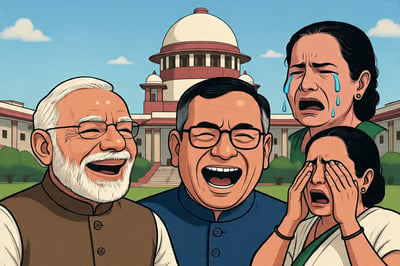
The political landscape of West Bengal has taken a dramatic turn following a shocking breakdown in communication within the Trinamool Congress. A crucial high-profile meeting of newly elected legislators, called by party supremo Mamata Banerjee at her Kalighat residence, had to be abruptly called off after a staggering number of elected representatives failed to show up. Out of the total 80 newly elected legislators, only 20 individuals arrived at the venue, leaving three-fourths of the seats empty. This sudden drop in attendance has sent shockwaves through the regional administration, especially because it occurred right after consecutive violent episodes targeted at senior party management. National General Secretary Abhishek Banerjee was aggressively targeted in South 24 Parganas, where an angry crowd threw stones, shoes, and eggs at his vehicle convoy, leading to severe security breaches and a physically torn shirt. Just a day later, senior lawmaker Kalyan Banerjee suffered a head injury during a chaotic confrontation near a police station in Hooghly. These back-to-back physical threats have highlighted a severe deterioration in local law and order, creating an atmosphere of intense fear and confusion among the ruling elite.
The official statement provided by the party management downplays any systemic crisis, explaining that the missing representatives were handling localized emergencies. Top spokesperson Kunal Ghosh clarified to the press that the lawmakers were tied down in their respective home constituencies, coordinating public protest rallies and assisting grassroots workers who faced mass arrests by the law enforcement machinery. According to the central command, these legislators had formally requested a postponement of the session, making it a legitimate administrative adjustment rather than a sign of internal weakness. However, a deeper look at the situation reveals that this explanation may just be a protective shield to cover up deep internal fractures. Rebel legislator Sandipan Saha openly broke ranks by publicly questioning the internal voting procedures used to appoint the party floor leader, deputy leader, and chief whip positions. Saha explained that previous resolutions on these appointments were riddled with procedural errors and lacked basic transparency, making his participation completely pointless until the leadership addresses these constitutional issues. This public disagreement confirms that the mass absence is heavily linked to growing internal dissatisfaction regarding how the top leadership makes structural decisions.
This sudden political vacuum has given massive leverage to the opposition camp, which is reading the empty chairs at Kalighat as a clear sign of a crumbling political structure. The Bharatiya Janata Party has aggressively captured this narrative, pointing out that local governance fatigue and public anger are finally catching up with the traditional power structure. Prominent opposition figures have noted that when local lawmakers begin distancing themselves from their own central leadership during a major crisis, it signals a deeper desire for political survival. This has sparked intense national debate over the ultimate destination of these absent lawmakers, with strong rumors suggesting that a coordinated group of 60 TMC MLA may join BJP in the coming days to secure their legislative future. The opposition claims that the ruling party is rapidly shrinking into a family-run enterprise consisting only of Mamata Banerjee and her nephew Abhishek Banerjee, while the actual grassroots lawmakers are looking for a reliable alternative platform to protect their public standing. This shift in loyalty highlights how local representatives are prioritizing their own political careers over traditional party discipline when the central leadership fails to provide stability.
In an effort to regain control over the narrative and shift public attention away from internal instability, the central command has instantly moved its focus from legislative strategy to aggressive street mobilization. The leadership has canceled all indoor administrative briefings and announced a massive series of public demonstrations, starting with block-level and ward-level rallies across both rural and urban sectors. This will be followed by a large-scale, day-long symbolic sit-in protest led directly by Mamata Banerjee at Kolkata's iconic Rani Rashmoni Road. While the party frames these public demonstrations as a righteous battle against post-poll violence and controversial municipal hawker eviction drives, it functions as a desperate attempt to test the loyalty of its remaining members. By forcing lawmakers out onto the streets, the high command is trying to visually count its true supporters and stop any potential floor-crossing. The true strength of the organization will become clear based on how many elected lawmakers actually stand next to the leadership on the public protest podium, or if the internal rebellion will result in a permanent realignment of power in the state assembly.