
Bengal Set To Build New Detention Camps For Illegal Migrants As Government Starts Big Crackdow
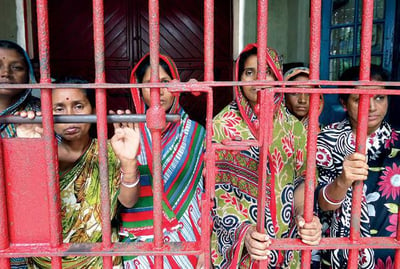
A massive political and administrative storm is sweeping across West Bengal as the newly formed Bharatiya Janata Party government has officially directed all twenty three district administrations to immediately establish holding centres to house illegal immigrants. This decisive directive, issued by the state Home and Hill Affairs Department over the weekend, marks a complete structural reversal from the policies of the previous Trinamool Congress regime led by Mamata Banerjee, which had strictly resisted such measures. Under the newly implemented system, these specialized facilities will be set up across every district to temporarily detain apprehended foreign nationals, including illegal Bangladeshi and Rohingya migrants, alongside foreign prisoners who have completed their sentences but are awaiting formal repatriation. With this aggressive policy implementation, West Bengal has effectively become the second state in the country after Assam to institutionalize a network of localized detention camps specifically tailored to address cross border infiltration.
The sweeping administrative order gives immediate physical shape to the highly publicised strategy openly articulated by Chief Minister Suvendu Adhikari just days earlier at the state secretariat. Adhikari announced that his administration would stringently adhere to a policy framework of identification, removal, and expulsion, aiming to completely revamp the border management apparatus of the state. In a radical departure from older protocols where detained individuals were subjected to lengthy local court proceedings, the state police have now been instructed to systematically bypass the judiciary and hand over apprehended individuals directly to the Border Security Force. The federal border agency will subsequently coordinate directly with the Border Guard Bangladesh to accelerate the physical pushback process across the international border. Additionally, the state government has fast tracked the allocation of long delayed land tracts to the central government to complete crucial fencing work along a twenty seven kilometer vulnerable stretch of the frontier.
However, the rapid roll out of these district level holding centres has ignited intense legal and social anxieties regarding human rights and potential communal polarization. The government has attempted to ease public fears by drawing a sharp line of distinction based on the Citizenship Amendment Act, explicitly stating that non Muslim refugees who arrived before the end of December twenty twenty four are fully protected and will face no harassment from local law enforcement. Conversely, critics and civil rights organizations argue that bypassing judicial oversight to enact instant deportations could lead to massive systemic abuse, severe profiling of linguistic minorities, and a complete breakdown of due process for vulnerable asylum seekers. The historical parallel with the deeply controversial transit camps of Assam looms large over the discourse, as legal scholars question whether a localized administrative body possesses the unmitigated authority to determine citizenship status without rigorous judicial scrutiny.
The ultimate trajectory of this highly aggressive border policy depends entirely on how the local state machinery coordinates with federal bodies and neighboring international authorities over the coming months. State Home Department officials have clarified that these holding centres are strictly intended to serve as short term transit facilities with a statutory detention limit of thirty days while identity verification is finalized. For a border state that has experienced decades of fierce electoral debates over demographic shifts and illegal immigration, this systemic overhaul represents a profound transition from political campaign rhetoric to direct executive enforcement. If the state government manages to smoothly execute this process without triggering widespread social unrest or legal interventions from the higher judiciary, it will fundamentally alter the security architecture of eastern India. If the implementation encounters logistical failures or humanitarian violations, it risks plunging the sensitive border region into an era of prolonged legal battles and severe civil confrontation.