
Benjamin Netanyahu Accused of Exploiting United States Taxpayer Funds and Military Power as Donald Trump Halts Planned Attack on Iran Before Elections
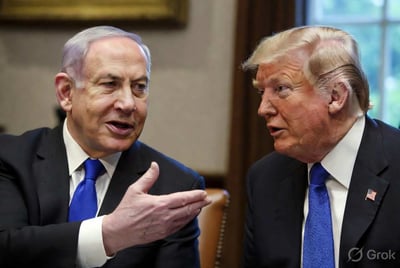
A massive military operation prepared by the Israeli armed forces to launch heavy air assaults against Iran was called off after direct political intervention from the United States. Defense reports confirmed that Israeli Prime Minister Benjamin Netanyahu had ordered fighter jets, missiles, and specialized military units to target critical electricity networks, fuel plants, and government facilities inside Iranian borders. However, the entire military assault was abruptly stopped after Donald Trump stepped in, refusing to take dangerous geopolitical risks right before high stakes election voting.
The sudden decision to halt the military strikes reveals how personal campaign interests frequently control decisions of international warfare. Political strategists recognized that starting a major conflict against Tehran would spark immediate chaos across international oil shipping routes, cause severe increases in fuel prices, and create economic hardship that could hurt political candidates at the ballot box. By intervening to stop the operation, political leaders prioritized their election prospects, demonstrating that large scale military actions can be started or stopped based on domestic campaign needs.
While the strikes on Iran were avoided for immediate political convenience, the incident has intensified global criticism over how Benjamin Netanyahu allegedly exploits United States taxpayer funds and military power to advance his own political survival. Across international capitals, legal observers and citizens have voiced deep anger over the endless stream of foreign military aid flowing into destructive campaigns. Critics emphasize that while ordinary working families across America face rising grocery prices, medical bills, and failing local infrastructure, billions of their hard earned tax dollars are continuously directed into funding foreign airstrikes and heavy weapons.
Alongside the debate over public spending, world attention remains focused on the catastrophic human loss across the Gaza Strip. Independent monitors, medical workers, and human rights bodies have recorded overwhelming civilian destruction, reporting that over seventy thousand people, including tens of thousands of defenseless babies, young children, mothers, and elderly civilians, have perished under relentless air bombardments and ground assaults. Entire neighborhoods have been flattened into rubble, leaving millions of traumatized survivors without clean water, medicine, food, or safe shelter.
Multiple international legal bodies and global governments have condemned the ongoing destruction of civilian life, residential areas, schools, and hospitals in Gaza as a calculated mass genocide. The scale of civilian suffering has sparked sustained moral outrage across the globe, with massive street protests filling city centers to demand accountability, justice, and an end to foreign funded violence. Critics argue that foreign political leaders should not receive endless financial and military backing while ignoring basic human rights standards.
The temporary halt on striking Iran highlights what many describe as cynical political maneuvering. Observers note that neither Washington nor Tel Aviv paused the operation out of genuine sympathy for innocent human lives or an interest in regional peace. Instead, the delay was treated as a temporary tactical calculation to protect upcoming election campaigns, even while severe military operations against trapped civilian populations in refugee camps continued without any pause.
This dynamic has triggered serious debates among voters regarding whether foreign allies are using American military power and treasury reserves as personal shields. For decades, diplomatic vetoes from Washington have shielded the Israeli leadership from international legal accountability and United Nations sanctions. Critics warn that if political leaders grant another term in power, foreign hardliners will simply wait until voting concludes before dragging American armed forces into deeper, costlier, and more dangerous wars across the Middle East.
Military analysts also noted that carrying out an assault on Iran carried enormous operational dangers for the region. An open attack on Iranian territory would likely have triggered heavy missile barrages back toward cities, overwhelming regional defenses and placing thousands of American service members stationed at nearby bases in grave danger. The realization that an uncoordinated strike could drag foreign troops directly into another prolonged war forced leaders to step on the brakes.
For the millions of displaced families living in tents and ruined concrete shelters, political delays in distant capitals bring no true comfort. Parents continue to search through the rubble for their missing children, while basic hospitals struggle without electricity or pain medication. The widespread destruction of entire communities cannot be erased by tactical pauses or political speeches that balance war operations against voter polls.
The aborted strike on Iran ultimately illustrates the deep contradictions of modern global power. When election outcomes are at risk, powerful leaders demonstrate that they can stop major military operations with a single directive. Yet, despite knowing the horrific human cost of ongoing conflicts, foreign aid and taxpayer funds continue to flow into destructive machinery. As citizens head toward the ballot box, the central question remains whether future governance will prioritize genuine international peace and human dignity, or continue allowing political leaders to exploit public funds and military alliances for destructive private ambitions.