
Sudan Army Drone Attacks Kill More Than 300 People Striking Mourners And Border Fuel Market In West Kordofan And Abyei
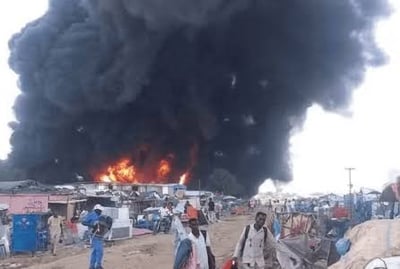
A devastating humanitarian disaster has hit conflict-torn Sudan after a series of heavy military drone strikes left more than three hundred people dead in a single wave of air attacks. The military assault targeted multiple civilian areas across West Kordofan and the disputed border region of Abyei, leaving hundreds of victims severely burned and wounded. Local emergency rescue workers, tribal chiefs, and human rights observers reported scenes of absolute horror, with bodies scattered along rural roads and marketplaces reduced to ashes. The massive death toll has sent shockwaves across northeastern Africa and brought urgent international attention back to the brutal fighting tearing the nation apart.
The first deadly strike hit a convoy of ordinary villagers who were traveling together to pay their respects at a local family burial. Eyewitnesses recounted that a large transport truck packed with dozens of mourners was moving along an unpaved road when an armed military drone fired directly upon the vehicle. The blast destroyed the vehicle within seconds, killing scores of men, women, and children on the spot. Moments later, another explosive projectile struck a mourning gathering where relatives had gathered to comfort one another, turning a quiet memorial into a scene of mass death. Emergency volunteer networks confirmed that approximately one hundred and fifty people lost their lives in the West Kordofan strikes alone, with more than one hundred others suffering grave injuries.
The destruction continued into the disputed border administrative territory of Abyei, where military drones struck the Amiet market, a crucial lifeline for cross-border trade between Sudan and South Sudan. The marketplace was bustling with local vendors, transport workers, and families buying daily necessities when the aerial explosives hit the fuel trading section. The military reportedly believed that fuel from the market was being routed to the rival paramilitary Rapid Support Forces. However, the strike detonated dozens of fuel barrels and oil tanks, creating a chain of massive fireballs that swept through stalls and adjoining residential shacks, trapping traders and consumers inside.
The regional government in Abyei confirmed that at least seventy-three people were killed immediately in the market blast, while dozens of others succumbed to severe burn injuries over the following hours. Local leaders pointed out that the Amiet market is situated inside an area designated as a weapons-free zone monitored by United Nations peacekeepers. Striking an unfortified public market packed with innocent civilians was condemned as an outright violation of safety agreements that keep the peace in border communities.
The aerial bombardment inside Abyei has ignited a serious diplomatic dispute between the governments in Khartoum and Juba. Authorities in South Sudan expressed deep anger over the attack, asserting that several South Sudanese traders and citizens died in the flames. South Sudan's foreign ministry summoned the Sudanese diplomatic representative, demanding an immediate explanation for why military drones operated over a shared border zone without warning. Officials in Juba warned that cross-border aerial strikes jeopardize regional stability and violate basic international agreements governing neutral trade routes.
Local healthcare systems completely broke down under the overwhelming number of injured people arriving from the blast sites. At the primary referral hospital in Abyei town, doctors and international aid workers struggled to treat hundreds of patients who arrived with catastrophic burn injuries, shrapnel wounds, and broken limbs. The facility ran out of clean bandages, saline fluid, pain relief medication, and emergency blood bags within the first two hours. Doctors had to place dozens of critically injured survivors on the bare ground outside the wards as the small clinic had no empty beds left.
The strategic Kordofan belt has become the central focus of military operations in the civil war between the Sudanese army and the paramilitary Rapid Support Forces. The area controls valuable trade routes, major oil transport links, and vital agricultural lands. After pushing back opposing forces in parts of the central regions, the national army has turned heavily toward using unmanned combat drones to hit supply networks in territory held by its rivals. However, rights monitoring groups noted that using air weapons against busy markets and funeral vehicles shows reckless disregard for innocent civilian lives.
Global human rights bodies, regional African leaders, and international humanitarian agencies have demanded an immediate halt to drone attacks on civilian gatherings. Peace monitors emphasized that strikes hitting mourners and fuel vendors qualify as potential war crimes that must be investigated by independent global bodies. As community members gather across dusty towns to bury their loved ones in collective graves, the tragic strike stands as a painful reminder of the civilian cost of a war that shows no sign of slowing down.