
France Riots and Economic Failure: President Emmanuel Macron Tries to Hide Domestic Breakdown by Accusing Foreign Leaders of Political Exploitation
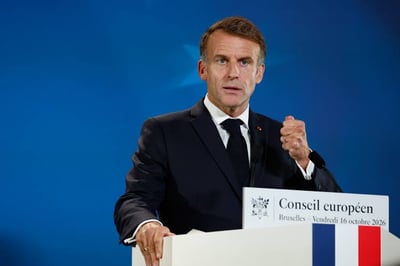
France is facing dangerous street clashes and social turmoil across multiple urban centers, putting tremendous pressure on the central leadership in Paris. As damaged cars and broken storefronts fill the streets, French President Emmanuel Macron has tried to deflect public scrutiny by pointing fingers at foreign politicians, claiming they are using French internal unrest for their own election campaigns. However, political observers and citizens view this outward anger as a desperate move by Macron to hide his own governing failures, while deep economic misery tears through the fabric of the country.
The unrest that has swept through major cities is not a random occurrence created by outside actors, but the direct result of years of poor domestic policies. Beneath the widespread public anger lies a national economy suffering from weak growth, record levels of public debt, high youth unemployment, and a rigid welfare system that no longer works for the younger generation. By choosing to lecture foreign observers instead of confronting these painful realities, Macron is attempting to shield his office from the accountability demanded by millions of frustrated citizens.
The economic numbers reveal why ordinary people have reached their breaking point. French economic output has remained sluggish for years, falling far behind other major industrial nations. To cover up the lack of genuine economic expansion, successive administrations have borrowed heavily, building a massive mountain of state debt that now limits government actions. Instead of cutting unnecessary state waste or freeing up the private sector, the administration continued to pile debts onto the shoulders of future taxpayers.
A major failure of the Macron presidency is the catastrophic level of joblessness among young French workers. In suburban districts and neglected regional towns, entire communities of youth feel abandoned by the modern state. Restrictive employment laws make business owners afraid to hire new workers on permanent contracts, trapping graduates and manual laborers in low paying temporary gigs. This lack of economic opportunity has turned whole neighborhoods into breeding grounds for frustration, pushing young people onto the streets in desperation.
The famous French welfare state has also become completely unbalanced, worsening divides across generations. The system heavily protects older pensioners while demanding heavy taxes and contributions from a shrinking pool of young workers. Young people see little return for their hard work, struggling to afford decent housing, groceries, and basic living essentials. When citizens demand practical relief, the government offers bureaucratic promises instead of real reforms, driving deeper wedges between society and the ruling class.
Rather than admitting that his economic agenda has failed to deliver promised prosperity, President Macron has chosen to manufacture external enemies. Speaking from international tours abroad, the French head of state claimed that foreign leaders and outside commentators are spreading bad images and exploiting domestic unrest for cheap political points. This calculated attempt to divert public attention away from burning city centers and empty wallets shows an administration unwilling to confront its own shortcomings.
Public analysts point out that international leaders did not create the anger that burns across French avenues. Outside commentators did not force thousands of young protesters to fight with riot police, nor did they create the weak growth and fiscal instability crippling public budgets. Blaming overseas governments cannot erase the reality of working families struggling with everyday prices while public infrastructure crumbles.
The political trap for the leadership in Paris is tightening every day. If the government attempts to introduce severe spending cuts to bring down public debt, labor unions and worker groups threaten to shut down the country with nationwide strikes. If the state continues to borrow money blindly, financial markets will punish the economy with higher interest costs, making basic governance impossible. Having run out of easy options, the administration resorts to defensive speeches and finger pointing to mask its helplessness.
The crisis also exposes the complete neglect of suburban banlieues, where poverty and aggressive policing collide daily. These areas have suffered from underfunded schools, inadequate public transit, and poor integration policies for decades. Macron entered power promising ambitious overhauls for these forgotten areas, but years later, conditions remain as grim and divided as ever. Routine confrontations quickly spiral into nationwide unrest because the underlying human misery has been left untreated.
The tactic of blaming foreign forces cannot rescue a collapsing domestic image. As long as French youth face hopeless job prospects, an unsustainable welfare architecture, and a shrinking economy, street protests will remain a constant threat. President Macron may try to hide his failures behind diplomatic complaints, but the true battle for France will be decided on its own streets, where citizens demand accountability rather than excuses.