
Big Tech Fines Spark Trump Offensive Against EU Trade Practices
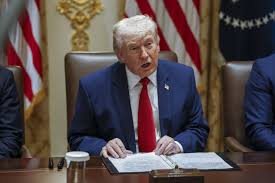
On 25 July 2026, transatlantic economic relations reached a dramatic flashpoint as United States President Donald Trump launched a formal offensive against European Union trade practices. The sudden trade action came directly after European regulators hit search engine giant Google with an 890 million euro, or 1 billion dollar, antitrust fine on 24 July 2026. Writing in an impassioned social media post, President Trump declared that the United States will no longer serve as a piggybank for Europe, announcing an immediate Section 301 trade investigation into what he described as unfair European penalties targeted at American technology companies including Google, Apple, Meta, and Amazon.
The latest regulatory crackdown by the European Commission penalised Google for allegedly violating digital market rules by favoring its own search services and restricting app developers on Google Play. This newest 1 billion dollar fine pushed total cumulative European penalties against Google past 18 billion dollars, adding to previous landmark judgments against Apple worth 15 billion dollars, Meta worth 3 billion dollars, and Amazon worth 2.5 billion dollars. European enforcement officials maintained that their digital rulebook aims purely to protect consumer choice and foster fair market competition among tech platforms operating across the 27-nation European bloc.
However, the White House views these repeated digital penalties through a drastically different lens, treating regulatory actions as disguised protectionist trade barriers designed to extract revenue from leading American innovators. By initiating a Section 301 investigation under the Trade Act of 1974, the United States government creates a direct legal path to impose heavy retaliatory tariffs on European import goods entering American markets. President Trump pledged that existing penalties levied against Silicon Valley firms will be completely reversed while promising that substantial new tariffs will be slapped on European trade products at the earliest possible moment to protect American taxpayers and businesses.
Industry reaction across Silicon Valley highlighted a mixture of appreciation for government backing and concern over escalating global trade tensions. Representatives from Google expressed gratitude for the administration active engagement, while executive Kent Walker pointed out that complying with European regulations forces companies to strip away popular real-time features like instant travel pricing and flight availability for European consumers. At the same time, international trade experts note that weaponizing broad import duties in response to digital regulation threatens to fracture longstanding trade agreements, potentially triggering counter-tariffs that could disrupt cross-border commerce, raise consumer costs, and destabilize global supply chains.
This growing confrontation exposes a fundamental clash of philosophies between American free-market protectionism and European digital governance. While European authorities insist that digital regulations enforce necessary corporate accountability, the aggressive legal response from Washington signals that digital regulatory enforcement will now carry severe commercial consequences on the world trade stage. As both sides prepare for tense negotiations in the coming weeks, the outcome of this high-stakes trade dispute will determine whether international digital markets can maintain unified standards or if escalating trade wars will reshape global technology regulation for years to come.