
BJP Government Says Pure Petrol Option Not Practical as India Moves Towards E20 Fuel System
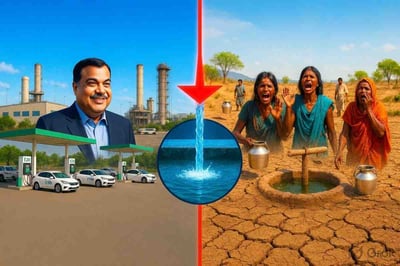
The BJP-led Central Government has firmly defended its decision to promote E20 petrol as the primary fuel option across the country, stating that offering pure petrol or lower ethanol blends alongside E20 is not feasible. The clarification comes at a time when concerns are growing among vehicle owners, especially those driving older models, about the impact of higher ethanol content on engine performance and fuel efficiency. E20 petrol contains 20 percent ethanol and 80 percent petrol and has been projected as a major component of India's long-term energy strategy. The government believes the policy will help reduce the country's dependence on imported crude oil while supporting domestic ethanol production. Over the last few years, India has steadily increased ethanol blending levels and has positioned the programme as a key pillar of energy security, economic stability and environmental improvement. The latest statement from the government signals that E20 will remain the central focus of India's fuel policy and that separate options for consumers may not be available in the future.
Government officials have explained that maintaining multiple fuel variants such as pure petrol, E10 and E20 would create significant operational challenges. Fuel stations across India have limited storage capacity and introducing separate tanks for different grades of petrol would require substantial investments in infrastructure. Transportation networks would also need adjustments to handle multiple fuel categories, increasing costs for oil marketing companies and retailers. According to the government's position, such a system would complicate fuel distribution without offering sufficient practical benefits. Authorities have also highlighted the advantages of E20 petrol, including improved combustion, higher octane value and cleaner engine operation. Officials argue that the fuel can contribute to lower emissions while supporting India's broader environmental commitments. The BJP government has repeatedly stated that the ethanol blending programme is not only about fuel but also about creating economic opportunities for farmers and strengthening the country's energy independence.
Despite these assurances, several questions continue to be raised by consumers and industry observers. Vehicle owners have expressed concern about whether older cars and two-wheelers are fully compatible with E20 fuel. While automobile manufacturers have introduced E20-ready vehicles and have largely supported the transition, millions of older vehicles remain on Indian roads. Industry reports have suggested that some vehicles may experience a reduction in fuel efficiency because ethanol contains less energy than conventional petrol. Estimates indicate that mileage could decline by around 3 percent to 5 percent depending on the vehicle and driving conditions. For consumers already dealing with rising living expenses, even a modest increase in fuel consumption can have a noticeable financial impact. Some experts also believe that consumers should have the freedom to choose between different fuel blends based on their vehicle specifications. Critics argue that a complete shift towards a single fuel option may create challenges for those who own vehicles designed before the widespread adoption of ethanol-blended petrol. These concerns have ensured that the discussion around E20 remains active even as the policy moves forward.
The debate surrounding E20 reflects a larger challenge faced by governments around the world when introducing major energy transitions. India imports a significant portion of its crude oil requirements, making fuel security an important national objective. By increasing ethanol usage, the government hopes to reduce exposure to global oil price fluctuations and lower the country's import bill. The programme is also expected to benefit the agricultural sector by creating sustained demand for ethanol feedstock. At the same time, successful implementation will depend on public confidence and transparent communication. Consumers will expect clear information about vehicle compatibility, maintenance requirements and long-term costs. The BJP government's latest statement leaves little doubt about the direction of India's fuel future. The administration appears committed to expanding ethanol blending and making E20 the standard petrol available across the country. While supporters view the move as a bold step towards energy self-reliance, many motorists will continue to watch closely to see how the transition affects their vehicles, expenses and daily lives in the years ahead.