
Prambanan The Story Behind The 1000 Year Old Hindu Temple PM Modi Visited In Indonesia
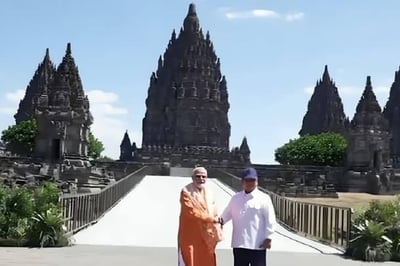
The historical plains of Central Java became the focal point of international cultural diplomacy as Indian Prime Minister Narendra Modi and Indonesian President Prabowo Subianto jointly traveled to the iconic Prambanan Temple complex in Yogyakarta. This highly anticipated visit culminated in the launch of a significant bilateral heritage partnership, following the exchange of a formal Letter of Intent to collaborate on the comprehensive conservation and restoration of the massive complex. Enthusiastic local crowds lined the approach routes waving national flags to welcome the leaders, illustrating the popular goodwill surrounding the event. By touring the site and offering formal prayers at the main shrines, the leaders highlighted how deep civilisational connections continue to serve as a steady foundation for modern strategic alliances between New Delhi and Jakarta.
Dating back to the 9th century CE, Prambanan stands today as the largest Hindu temple site in Indonesia and the second largest across Southeast Asia. The architectural marvel was originally commissioned under the rulers of the Hindu Mataram Kingdom, specifically King Rakai Pikatan, and completed by his successor Lokapala as a monumental tribute to Shaivite Hinduism. The vast complex was designed using a layout of 3 concentric squares containing 240 individual structures, with the towering central Shiva temple rising an impressive 47 meters into the tropical sky. However, the glorious era of the site was cut short in the 10th century when political power shifted to East Java, and catastrophic volcanic eruptions from the nearby Mount Merapi buried the complex under thick layers of ash, leaving the abandoned structures vulnerable to centuries of severe earthquake damage.
A closer examination of this new heritage pact reveals a highly calculated soft power strategy that extends far beyond standard archaeological preservation. By deploying technical expertise from the Archaeological Survey of India to rebuild the collapsed outer auxiliary shrines, New Delhi is actively using its Act East policy to forge deep emotional ties with a critical maritime neighbor in the Indo-Pacific zone. This approach effectively counters alternative regional geopolitical influences by reviving historical links that are more than 1000 years old. For Indonesia, welcoming Indian restoration assistance allows the country to upgrade its cultural tourism infrastructure while celebrating its pluralistic society, demonstrating how a majorly Muslim nation can preserve and take immense state pride in its ancient Hindu milestones.
The true success of this international partnership depends on how well both governments can translate shared ancient arts into modern public cooperation. The stone walls of the main Prambanan shrines feature exceptionally detailed narrative reliefs illustrating the epic story of the Ramayana, a traditional narrative that remains a vibrant part of local Javanese theater and performing arts to this day. While some realistic political analysts might argue that spending diplomatic energy on ancient ruins does not directly resolve immediate trade imbalances or maritime security friction, this cultural diplomacy creates an essential layer of mutual trust. By successfully restoring these ancient volcanic stone spires, India and Indonesia are proving that historical roots provide a highly collaborative bridge toward a peaceful and stable economic future.