
Iran Fires Back Massive Missile Salvos At US Military Bases After Overnight Airstrikes
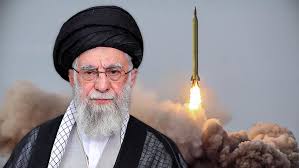
The military standoff in West Asia entered a highly dangerous and unchartered territory on July 8, 2026, as Iran launched immediate, direct retaliatory strikes against regional American positions. The dramatic escalation unfolded just hours after United States Central Command forces executed a massive overnight aerial bombardment hitting 80 separate strategic military targets within southern Iran. Washington stated that its heavy bombardment was a direct response to a series of projectile and drone attacks that severely damaged 3 commercial oil tankers transiting the crucial Strait of Hormuz shipping lane. Moving with unexpected speed, the Islamic Revolutionary Guard Corps countered by launching sweeping waves of ballistic missiles and explosive drones targeting 85 distinct American military hubs situated across Bahrain and Kuwait. Air raid sirens blared continuously across the Persian Gulf throughout the morning as advanced air defense batteries engaged incoming projectiles, signaling the complete collapse of previous diplomatic channels and regional ceasefires.
The speed and scale of the Iranian counter-offensive expose a critical miscalculation by western defense strategists who believed that heavy precision strikes would easily deter Tehran from entering a wider conflict. By choosing to target active sovereign nations like Bahrain and Kuwait that host major American military infrastructure, the Iranian leadership has signaled its complete willingness to risk a full-scale regional war to preserve its domestic authority. This aggressive posture has effectively neutralized the deterrence value of the initial American air campaign. Instead of isolating the Islamic Republic, the severe strikes along the coastline have driven the political factions inside Tehran to unite under a singular military objective, using the external threat to rally public support during a period of high economic vulnerability.
The immediate geopolitical consequence of this direct warfare is the rapid expansion of the battle zone, dragging neighboring Gulf states into an active crossfire that they have spent years trying to avoid through delicate diplomatic mediation. The Khatam al-Anbiya Central Headquarters, which oversees Iran's top joint military operations, issued a stern national broadcast declaring that the era of western extortion and bullying has permanently ended. Security experts note that by utilizing highly mobile, hidden underground missile silos and distributed drone launch hubs, the Iranian military was able to absorb the initial American shock wave and maintain significant offensive capabilities. This rapid response capability highlights the severe limits of relying solely on airstrikes to disable a deeply entrenched and highly decentralized regional military network.
The economic and logistical fallout of this direct military confrontation is already radiating across the global economy with intense speed. International energy markets reacted instantly to the active hostilities, causing crude oil futures on the Multi Commodity Exchange to surge past 3 percent within a few hours to reach 6932 rupees per barrel as traders prepare for a prolonged interruption in energy supplies. In response to the active missile exchanges, the European Union Aviation Safety Agency issued an immediate emergency notice ordering all commercial airlines to completely bypass the airspace over Iran and Iraq until at least August 31, 2026. Global powers, led by the Chinese Foreign Ministry, are urgently demanding an immediate cessation of hostilities, warning both Washington and Tehran that an all-out war in the world's most critical energy corridor will cause catastrophic economic damage that no nation can easily escape.