
BJP Government Will Be Removed From Centre Soon Claims Mamata Banerjee As She Accuses West Bengal Leadership Of Targeting Minorities And Hawkers
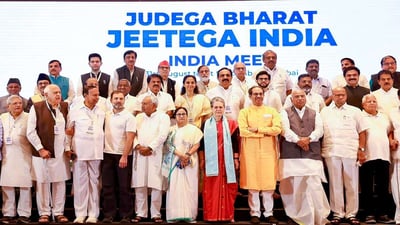
The political atmosphere in West Bengal has reached a boiling point following a high stakes organizational meeting chaired by Trinamool Congress supremo Mamata Banerjee at her Kolkata residence. Speaking directly to her party legislators during an internal review, the former Chief Minister launched a blistering attack against the newly formed state government led by Chief Minister Suvendu Adhikari. Mamata Banerjee boldly predicted that the Bharatiya Janata Party led national coalition is unstable and will be systematically removed from power at the Centre in the coming days. The closed door administrative strategy meeting, which witnessed the participation of senior leaders including national general secretary Abhishek Banerjee, was organized to evaluate the changing political dynamic after the recent historic shift in state governance. The fiery speech signals a major tactical pivot for the regional outfit as it transitions into a combative state opposition, looking to mobilize mass public support against the policies of the ruling dispensation.
The core of the confrontation revolves around aggressive anti encroachment drives recently executed by administrative and railway authorities at vital communication hubs like Howrah Junction, Ballygunge, and Sealdah railway station. Over five hundred roadside stalls were completely dismantled by heavy payloaders, affecting the daily earnings of numerous small scale vendors. Mamata Banerjee strongly condemned these clearance operations, characterizing them as a malicious bulldozer culture deliberately engineered to target financially vulnerable roadside hawkers and specific minority communities. The leader asserted that these administrative crackdowns represent a direct tampering with constitutional ideas and secular values. Conversely, state officials and railway representatives defended the clean up operations as routine administrative duties required to clear heavily congested pedestrian pathways, reduce severe traffic bottlenecks, and restore public order for millions of commuting railway passengers who navigate those congested terminal zones daily.
Adding intense personal drama to the systemic political conflict, Abhishek Banerjee revealed during the meeting that he had recently received an official demolition notice from the Kolkata Municipal Corporation regarding alleged unauthorized structural expansions at his private residence in south Kolkata. The development carries massive political irony given that the municipal body remains under the operational control of the opposition party, with close loyalist Firhad Hakim serving as the city Mayor. The parliamentarian openly dared the ruling establishment to raze his home, stating that legal intimidation would never force his leadership to bow down. Meanwhile, the ruling national party countered the narrative by reminding the public that initial hawker eviction drives were historically initiated by the previous state administration itself to clean up urban pavements, framing the sudden defensive stance as selective political opportunism designed to shield illegal local syndicates.
From a structural standpoint, this intense confrontation demonstrates how localized municipal actions can be instantly upscaled into national ideological battles in the modern electoral ecosystem. The strategic decision to launch statewide street protests starting from late May shows that the opposition intends to use the narrative of minority marginalization and lower class economic displacement to destabilize the fresh governance framework. While the ruling administration gains immediate governance credit from urban middle class voters for clearing gridlocked transportation corridors, it simultaneously risks creating massive resentment among the vast unorganized labor force. The rapid escalation of this local dispute highlights a structural reality in contemporary Indian politics, where localized civic governance, enforcement of public space laws, and personal property disputes are consistently leveraged to build larger national narratives regarding democratic survival and majoritarian high handedness.