
PM Modi Left Speechless By Norway Journalist Who Now Asks Rahul Gandhi For Interview Online
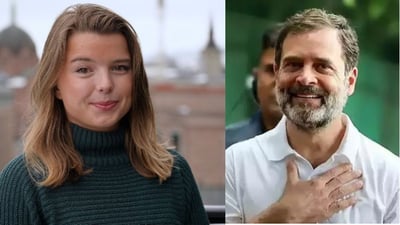
A fresh geopolitical and internal political dispute has broken out in India following a viral interaction at the India Nordic Summit in Oslo, Norway. As Prime Minister Narendra Modi and Norwegian Prime Minister Jonas Gahr Store were leaving the stage after a joint press statement, an unscripted moment caught the attention of global media. Helle Lyng, a prominent journalist working with the Norwegian newspaper Dagsavisen, called out to the Indian leader, asking why he does not take questions from the freest press in the world. The Prime Minister did not halt or offer a reply, walking straight past the media team. While government supporters clarified that standard diplomatic protocols for joint statements do not include unscheduled media interactions, the video clip circulated rapidly on social media, sparking heated arguments regarding political transparency and press interactions during foreign state visits.
In response to the growing internet traction of the video, the Indian Embassy in Norway organized an official press briefing at the Radisson Blu Plaza hotel in Oslo, inviting the local media contingent including Helle Lyng. The interaction turned highly dramatic when the journalist aggressively questioned Indian officials from the Ministry of External Affairs about domestic human rights records and media freedom. Ministry of External Affairs Secretary West Sibi George strongly countered her claims, emphasizing the vast constitutional framework of India that fully protects fundamental human rights and legal equality. The diplomat expressed clear visible frustration when interrupted, explaining that New Delhi alone possesses more than two hundred active news channels broadcasting across multiple regional languages. He asserted that foreign commentators frequently depend on biased or incomplete summaries from external organizations without recognizing the true institutional depth and immense demographic scale of the democratic setup in India.
The diplomatic friction quickly transformed into a major battleground back home as national opposition leaders used the footage to criticize the central government. Lok Sabha Leader of Opposition Rahul Gandhi shared the specific video recording on his official social media handle, stating that true leadership has nothing to hide and nothing to fear. He claimed that public instances where top leaders choose to bypass spontaneous press queries can harm the global reputation of the nation. Following this direct digital post, Helle Lyng responded publicly to the Congress leader on the same microblogging network, asking if he would be available for a personal phone interview during Norwegian time to discuss his thoughts on the bilateral summit. Although the digital outreach has created massive engagement and speculation among political analysts online, the senior opposition representative has not yet issued a formal acceptance or response to the media invitation.
This entire sequence highlights the unpredictable nature of modern communication where digital clips can shape massive national narratives within hours. From a critical viewpoint, the incident shows how a standard diplomatic tour can be completely overshadowed by a single unscripted interaction in a highly connected global ecosystem. The ruling party firmly maintains that foreign leaders routinely follow strict pre planned schedules during state visits, meaning the initial silence was purely a matter of official protocol rather than any form of hesitation. Conversely, the opposition has managed to leverage the moment to create a broader public discourse around democratic accountability and open press communication. The swift transition of the foreign journalist from challenging the sitting Prime Minister to seeking an interview with the top opposition leader demonstrates how international media actions now directly impact local electoral politics, proving that digital perception can sometimes become more influential than official policy speeches.